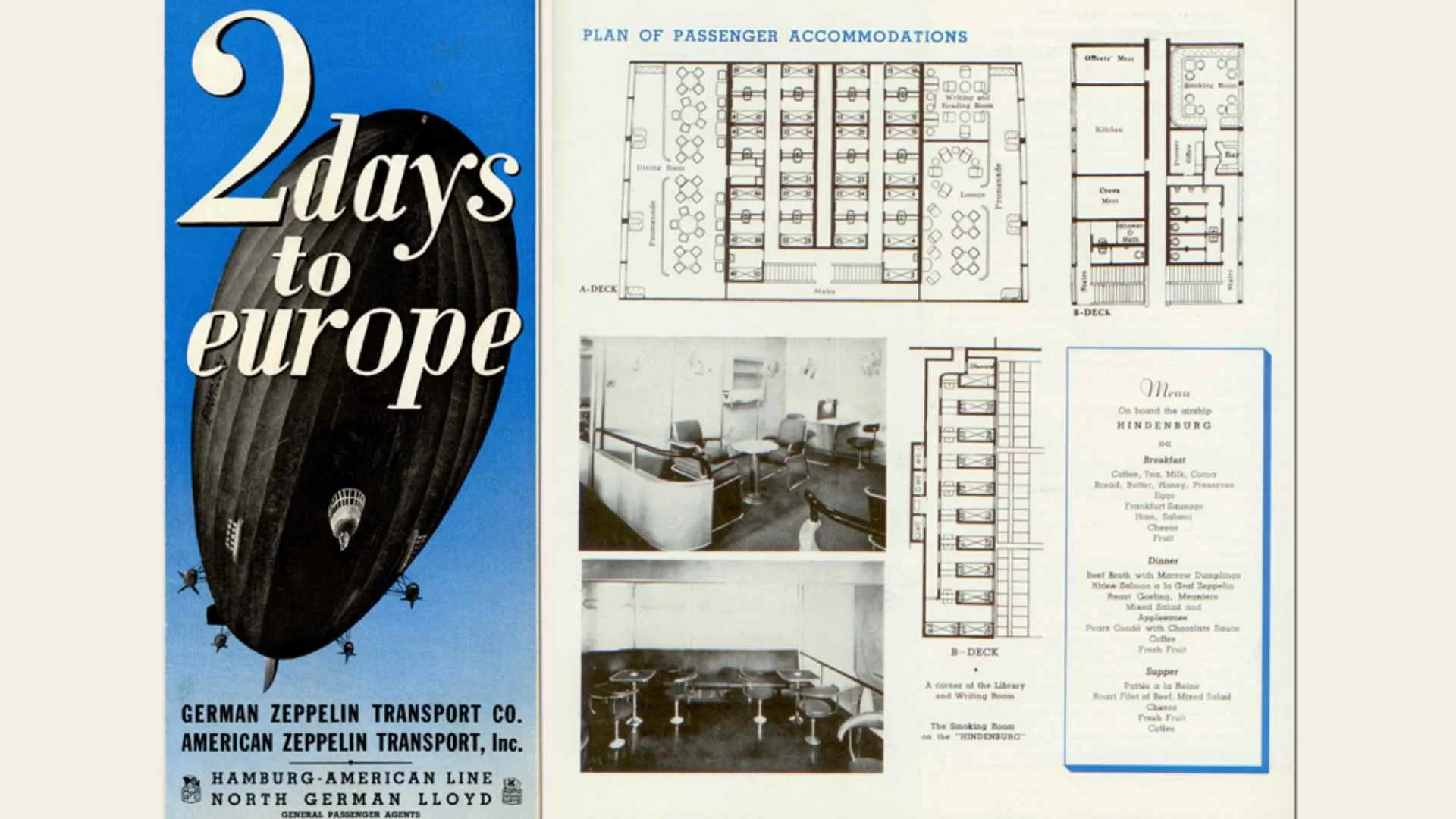
The Man Who Walked Out of Fire
A Last Supper Aboard the Hindenburg
There are meals one remembers for their flavour.
And others—for their timing.
On the evening of May 6th, 1937, as the great airship LZ 129 Hindenburg drifted toward its landing at Naval Air Station Lakehurst, dinner had already been served.
White linens. Polished silver. Quiet conversation.
Nothing at the table hinted that the sky was about to catch fire.
The Menu, Suspended in Time
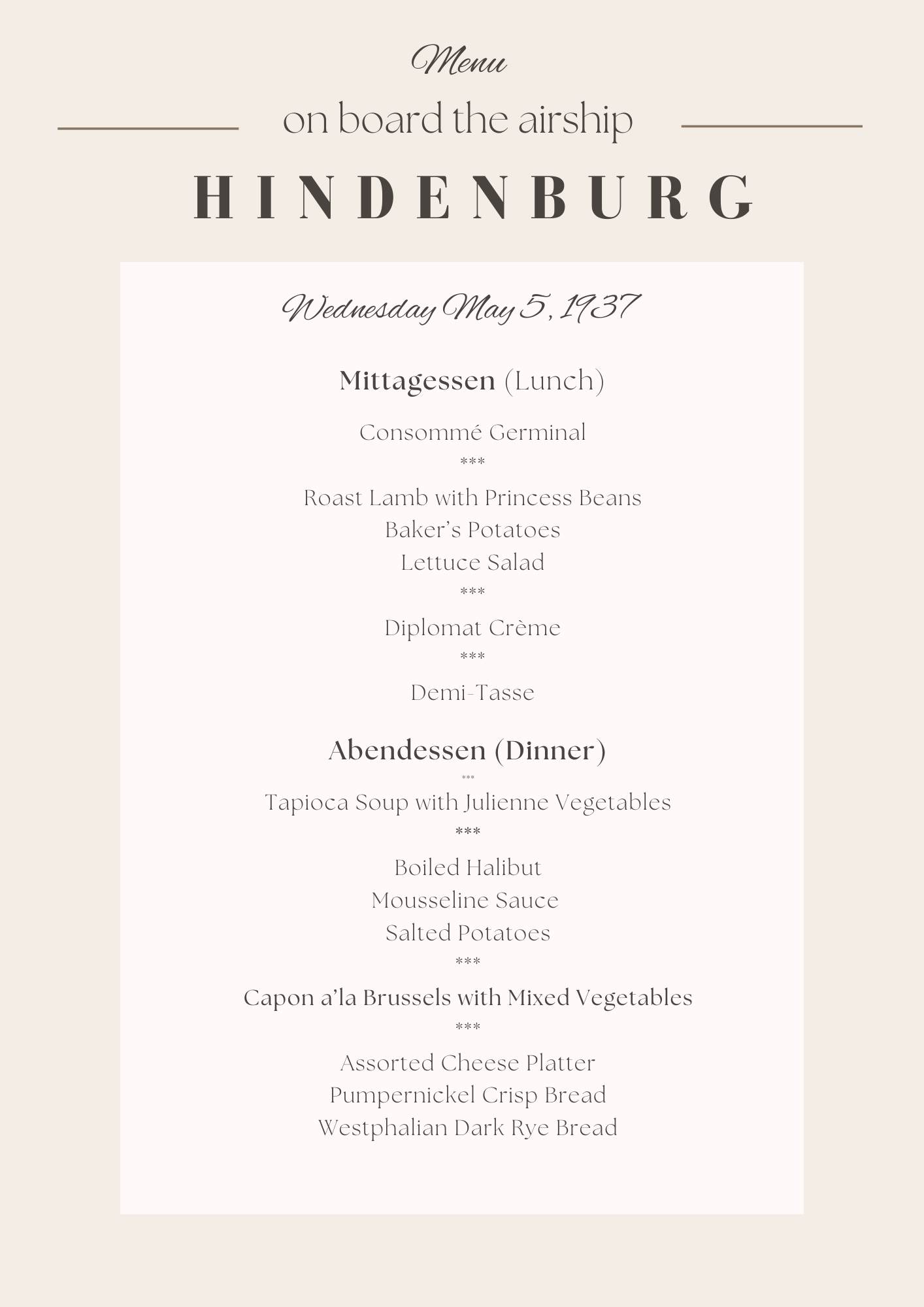
The final luncheon and dinner menus—elegant, restrained, unmistakably European—offered passengers a taste of refinement at 650 feet above the Atlantic.
A consommé to begin.
Roast lamb with princess beans.
Halibut with mousseline sauce.
A diplomat crème to finish.
It was food, carrying with it a restrained reassurance—while even linen napkins, placed carefully in their holders, were expected to serve twice in deference to weight.
A statement that even in the sky, civilization held.
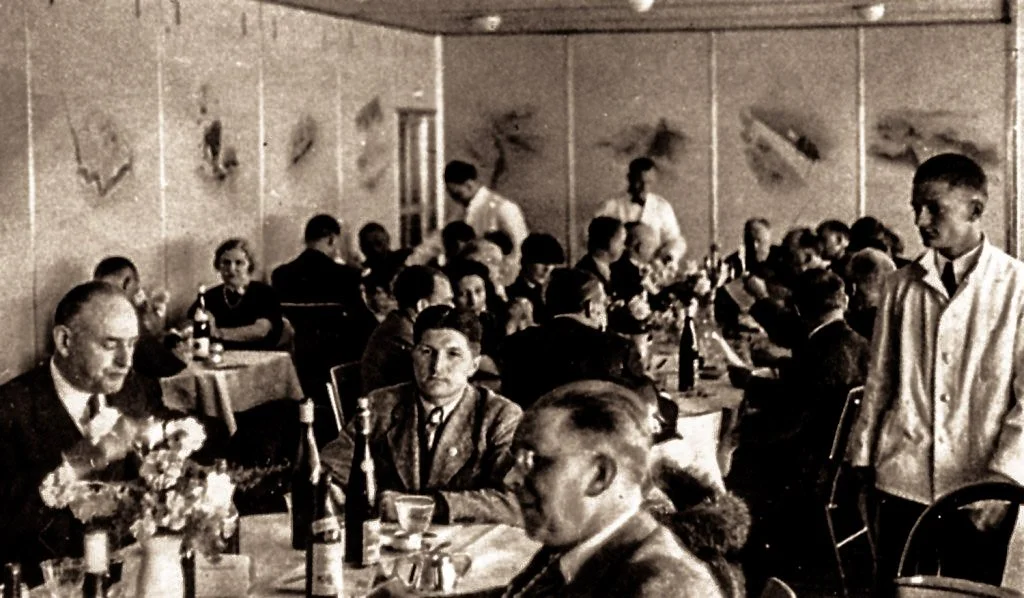
Dining on the Hindenburg
While passengers lingered over their demi-tasse, the ship’s chef, Heinrich Maier, worked below.
He had provisioned this journey with care. Days earlier, officials had combed through his stores, sampling delicacies under the shadow of bomb threats. Even the kitchen—heart of comfort—had not escaped suspicion.
And yet, the rhythm of service continued.
As it always does.
Until that evening.
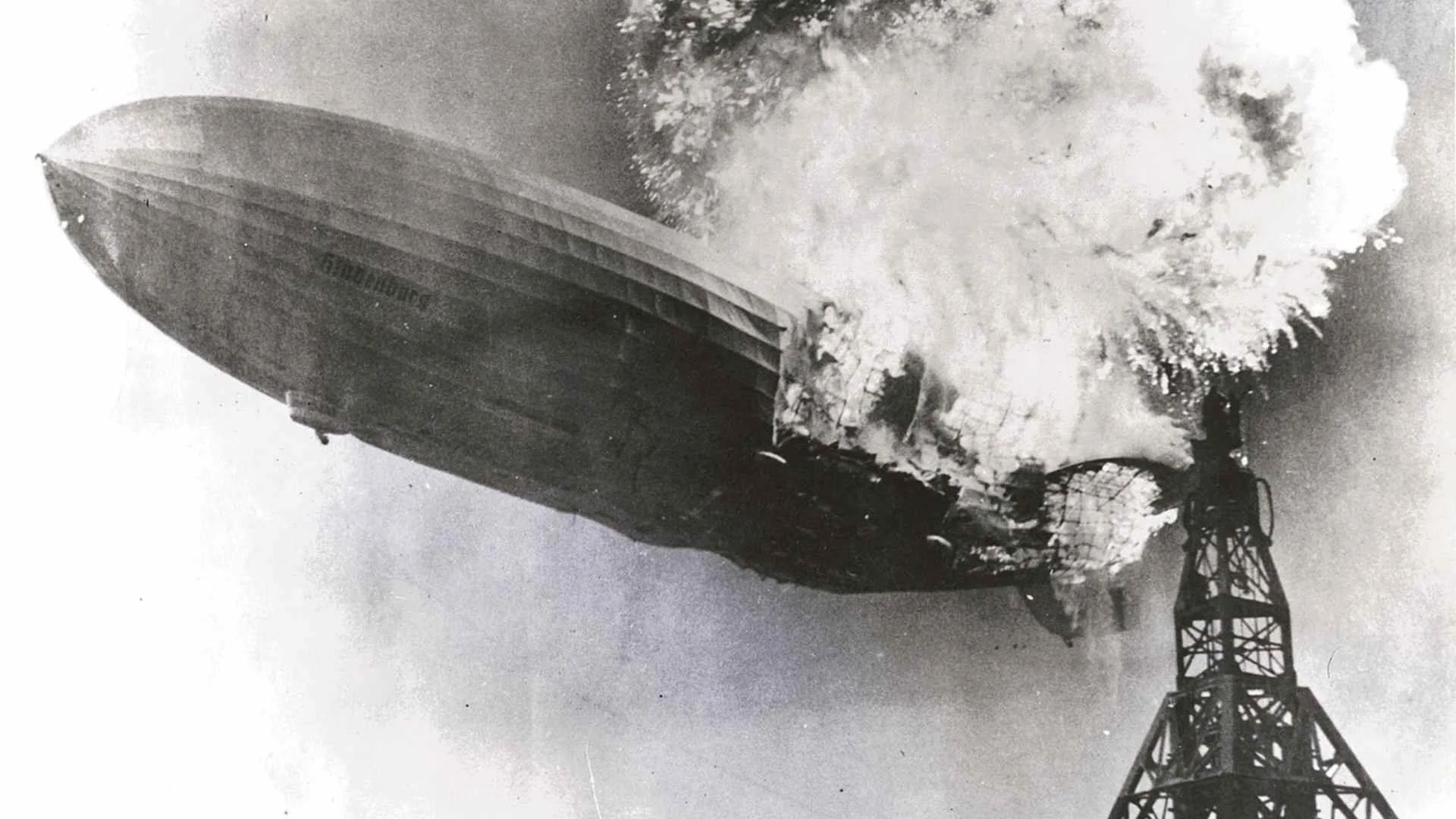
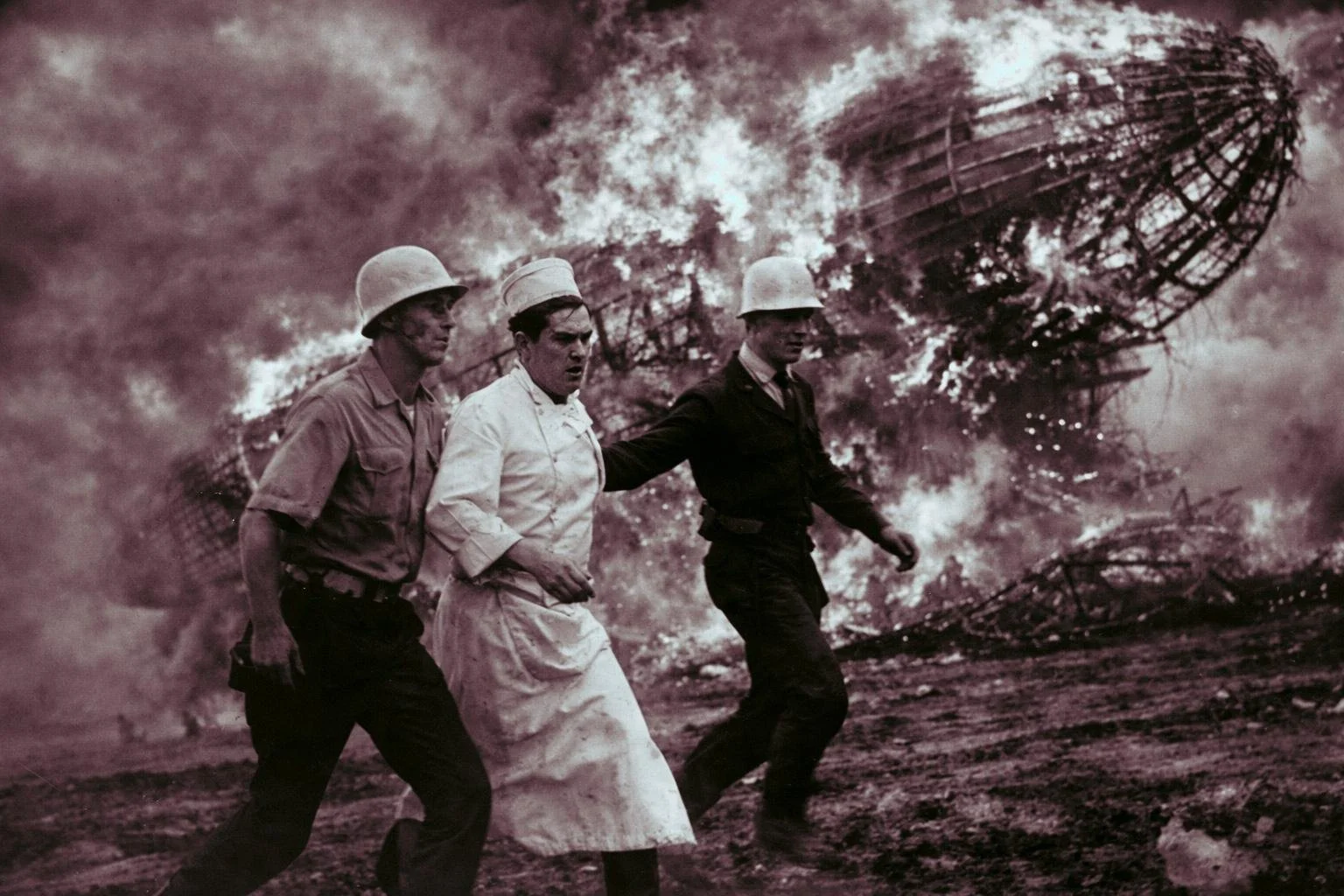
The zeppelin Hindenburg explosion and fire 6 May 1937 by Sam Shere
At approximately 7 p.m., the landing lines were cast.
Then—fire.
Without warning. Without hesitation.
But sudden, consuming, absolute.
Within moments, the Hindenburg became a falling constellation.
And in the kitchen, crockery shattered. The floor tilted. Heat surged.
Maier did not hesitate.
Following a young cabin boy through a service hatch, he leapt—ten, perhaps fifteen feet—to the ground below.
Behind him, the ship was already gone.
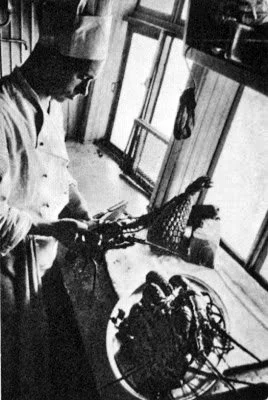
Preparing Lobsters on The Hindenburg
Chef Heinrich Maier emerged from the wreckage unscathed, his whites untouched. He later returned to Germany and resumed his career in the great hotels of Frankfurt.
He survived.
Untouched by flame. Unbroken.
Even his chef’s whites remained, astonishingly, intact.
Newsreel footage would later show him—calmly smoking—as if he had merely stepped outside between courses.
A man who had just walked out of fire.
We often think of history in its grand gestures—its explosions, its endings.
But what lingers, more curiously, are its ordinary moments.
A spoon lifted.
A napkin folded and placed in its holder.
A final sip of coffee, taken without urgency.
The passengers of the Hindenburg did not know they were dining in the final chapter of an era.
But perhaps that is always the case.
Some meals nourish the body. Others, unknowingly, mark the edge of history.