
From Game of Thrones to Catalan Kitchens
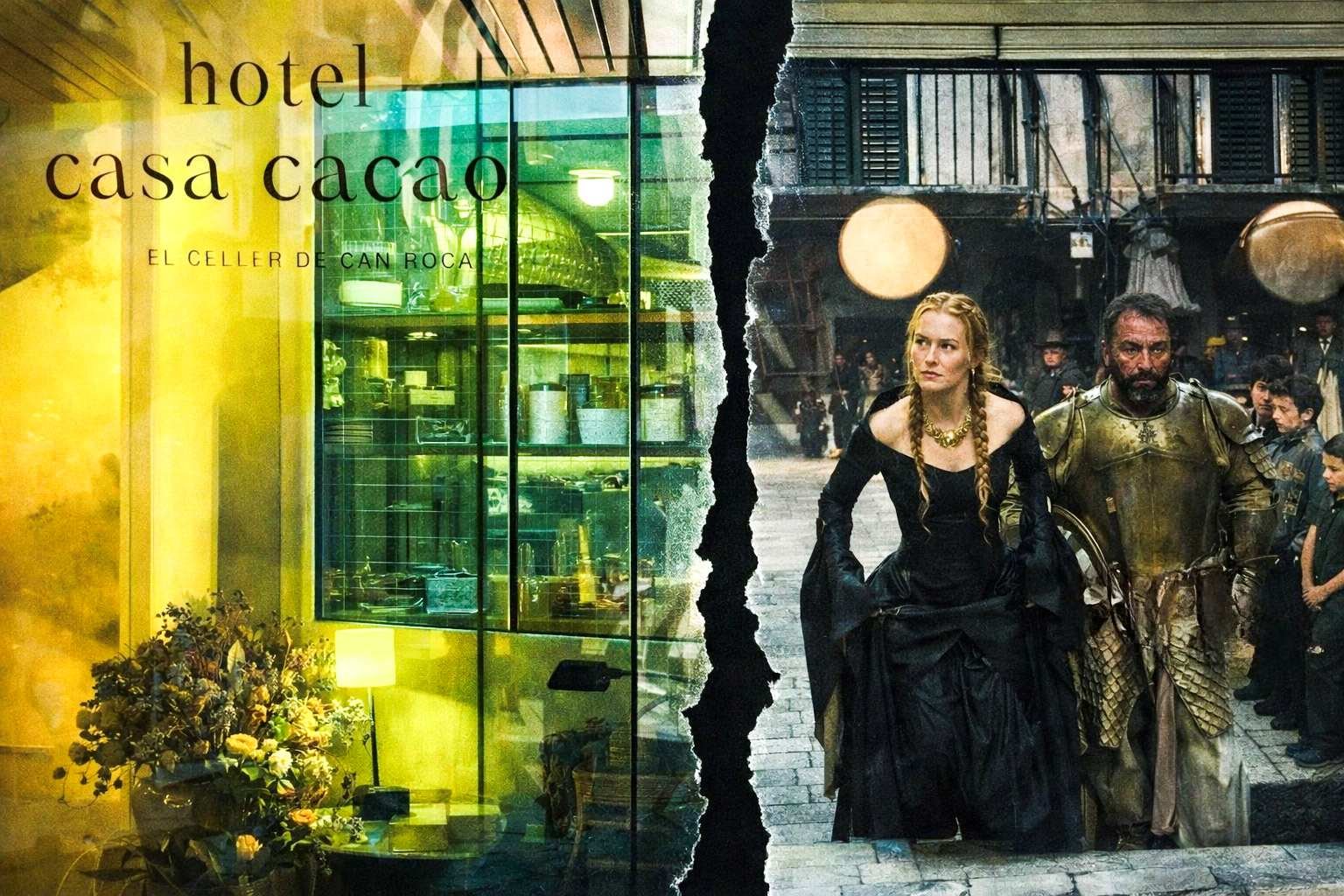
Wandering Girona’s medieval streets and discovering the rich traditions of Catalan cooking—a city famous for its cuisine and its starring role in Game of Thrones.
For nearly five years I lived within sight of the Pyrenees, only a short journey from the Catalan city of Girona. Like many familiar places, it was not until I had left that I truly began to appreciate it.
What lingers most in memory is Girona’s deep sense of history—a city shaped by medieval grandeur and the enduring legacy of the Moors. And as with many historic cities, one of the most rewarding ways to discover Girona is through its food.
Located in Catalonia in northeastern Spain, Girona is a beautifully preserved medieval city known for its remarkable cuisine and as a filming location for the television series Game of Thrones.
The city, with its bustling cobblestone lanes and timeworn walls, has a knack for sneaking into your heart, much like it snuck onto the big screen.
Strolling through Girona is like wandering through the pages of a well-thumbed fantasy novel. The alleys twist and turn. As you amble, you can almost hear the echoes of market vendors and the metallic clash of swords from the epic saga, so much so that you half expect to bump into a couple of knights or a wandering noble.
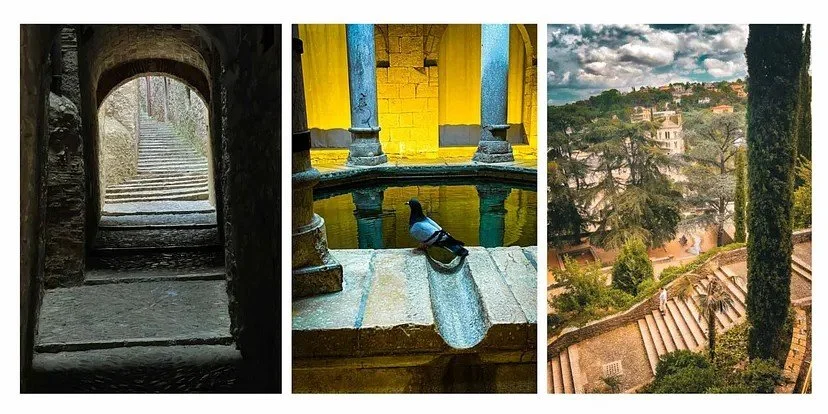
Views of Girona and Arab Baths
I confess to being an unabashed epicurean. I am endlessly in search of the next great meal or recipe because I just adore cooking and entertaining. So, it was perhaps fate, or just dumb luck, that I found myself living near Girona—a city that could well be the unsung hero of culinary excellence in Spain.
Girona not only hosts some of the finest restaurants and cuisine in Spain, but it also played a pivotal role in bringing to life the feasts and follies of the Game of Thrones saga. As any fan will tell you, if there’s one thing that series did almost as well as dramatic exits, it was food.
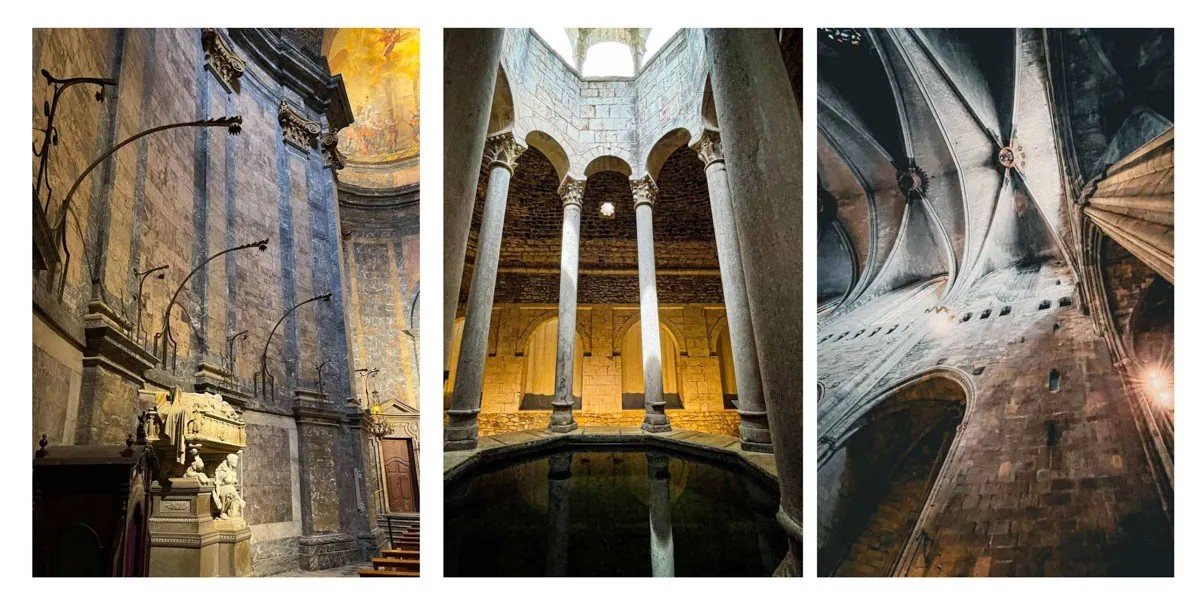
Views of Girona Cathedral (Interior)
Just like the characters in ‘Game of Thrones’ savored grand feasts that celebrated their cultures, Girona’s restaurants proudly showcase the region’s local flavors and traditions. The city is peppered with eateries so good, you could probably coax a knight to lay down his sword and pick up a dinner fork instead.
The Inventive Traditions of Catalan Cuisine
As an outsider encountering Catalan cooking for the first time, I was captivated by its freshness, the deep history reflected in its flavours, and its bold, vibrant character. One of the delights of discovering this cuisine is how familiar ingredients are transformed in surprising ways.
Catalan cuisine uses well-loved ingredients like onions, peppers, tomatoes, garlic, various meats, nuts, and legumes, yet transforms them in surprisingly innovative ways that set it apart from typical culinary traditions.
Nuts might be ground to thicken sauces, while cinnamon and chocolate find their way into savory dishes. Catalan dishes often feature unexpected pairings like rabbit with snails or chicken with prawns, enhancing their distinct character.
The essence of this cuisine lies in its ability to surprise, using familiar ingredients in novel ways to create an unforgettable dining experience.
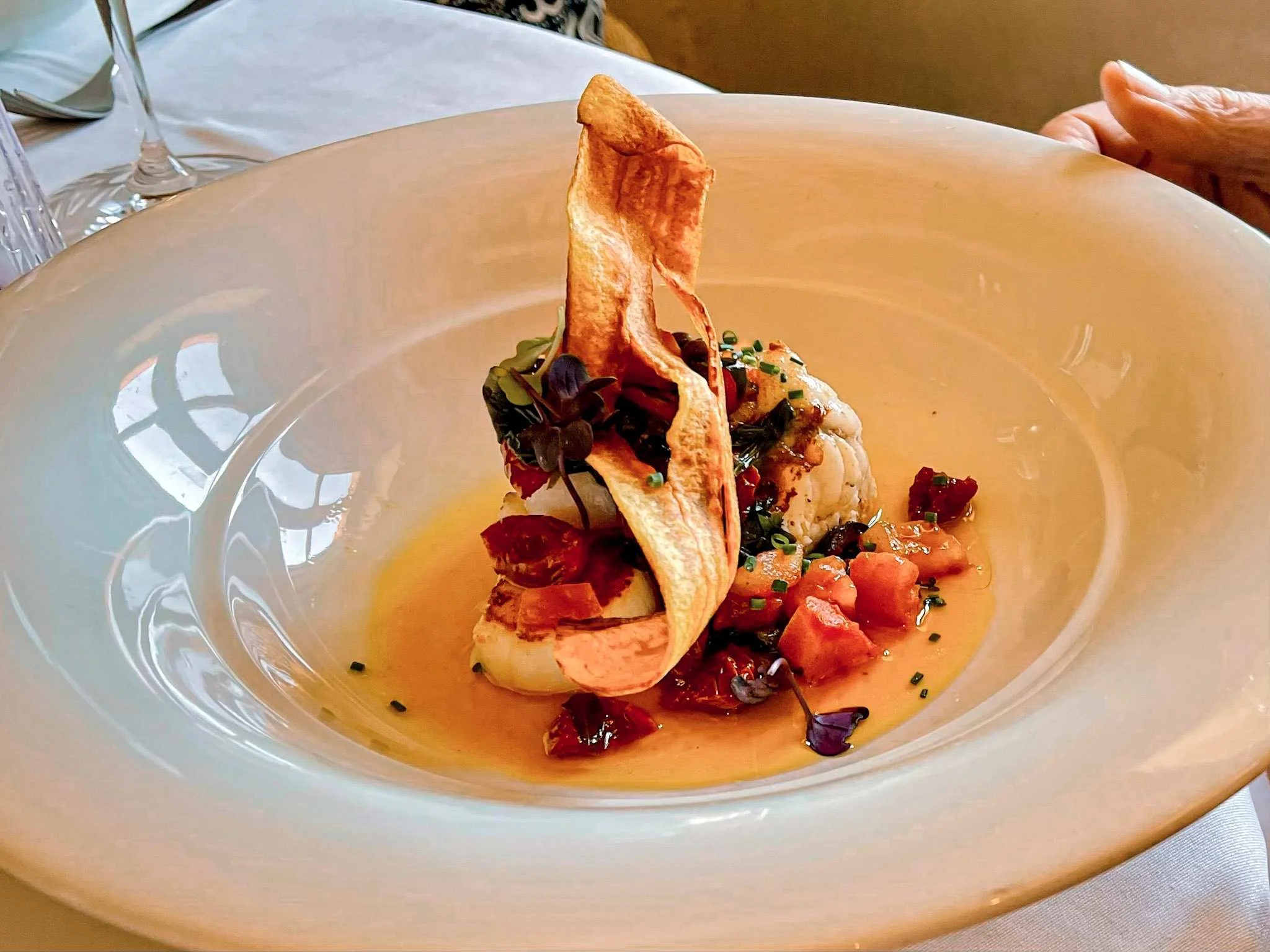
Fillet of Monkfish at Can Roquet, Romanyà del Selva
Civet de Llagosta—or What to Do With Your Leftover Lobster
Lobster (Llagosta) is a favorite all across the Catalan regions, even far inland in places like Roussillon. In Maury, a wine area northwest of Perpignan, lobster is considered one of the most important local specialties.
There’s a funny story about how, after major holidays like the Maury Town Festival, you’d see tons of lobster shells in the trash. A winery owner named Bernard Dauré recounts how people used to carefully arrange whole lobster carapaces on top of their trash bags.
They did this so the garbage collectors would notice and tell others that so-and-so had ten or twelve lobsters for their holiday feast. It was such a big deal that some folks even bought empty shells to make it look like they ate more lobster than they really did!
What’s even stranger to think about: instead of opting for fancy preparations like Thermidor or Sauce Americaine, one of the Catalans’ favorite ways to enjoy lobster is in a humble lobster stew (Civet de Llagosta)!
Making Lobster Stew
It’s a surprisingly simple dish—lobster shells sautéed in olive oil until their shells turn a brilliant red and then flamed with cognac to draw out their natural sweetness.
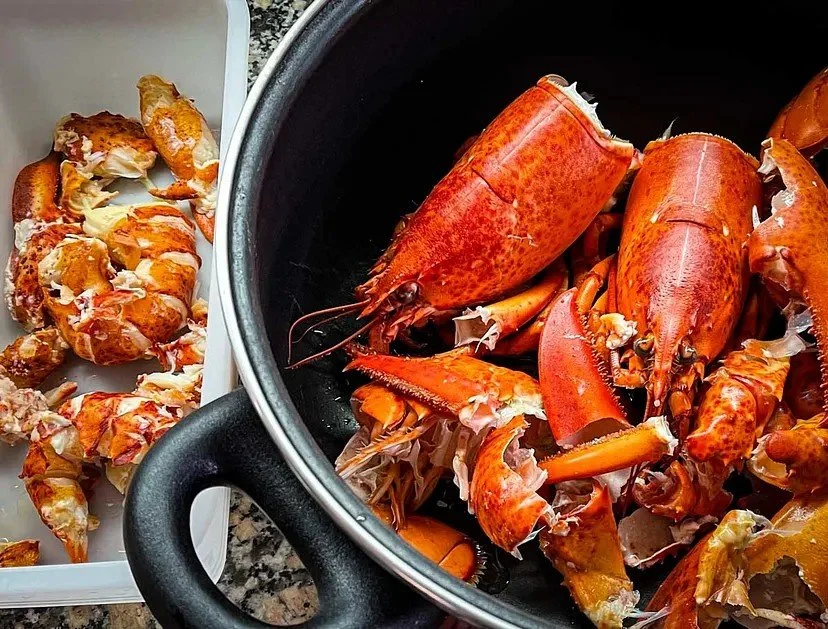
Preparing Lobsters
The base of the stew is a robust sofregit made with freshly chopped onions, shallots, carrots, and ripe tomatoes, which provide a savory foundation. Diced cured ham adds a touch of saltiness, complementing the depth of flavor. The stew is simmered in a mix of tawny port along with fish and veal stocks, enriching it with complex layers of taste.
Aromatic herbs like thyme, rosemary, and parsley are bundled into a bouquet garni, infusing the stew with fragrant notes. Finished with a pinch of cayenne for warmth and served piping hot, this lobster stew promises a memorable feast, embodying the heart and soul of Girona’s culinary artistry.
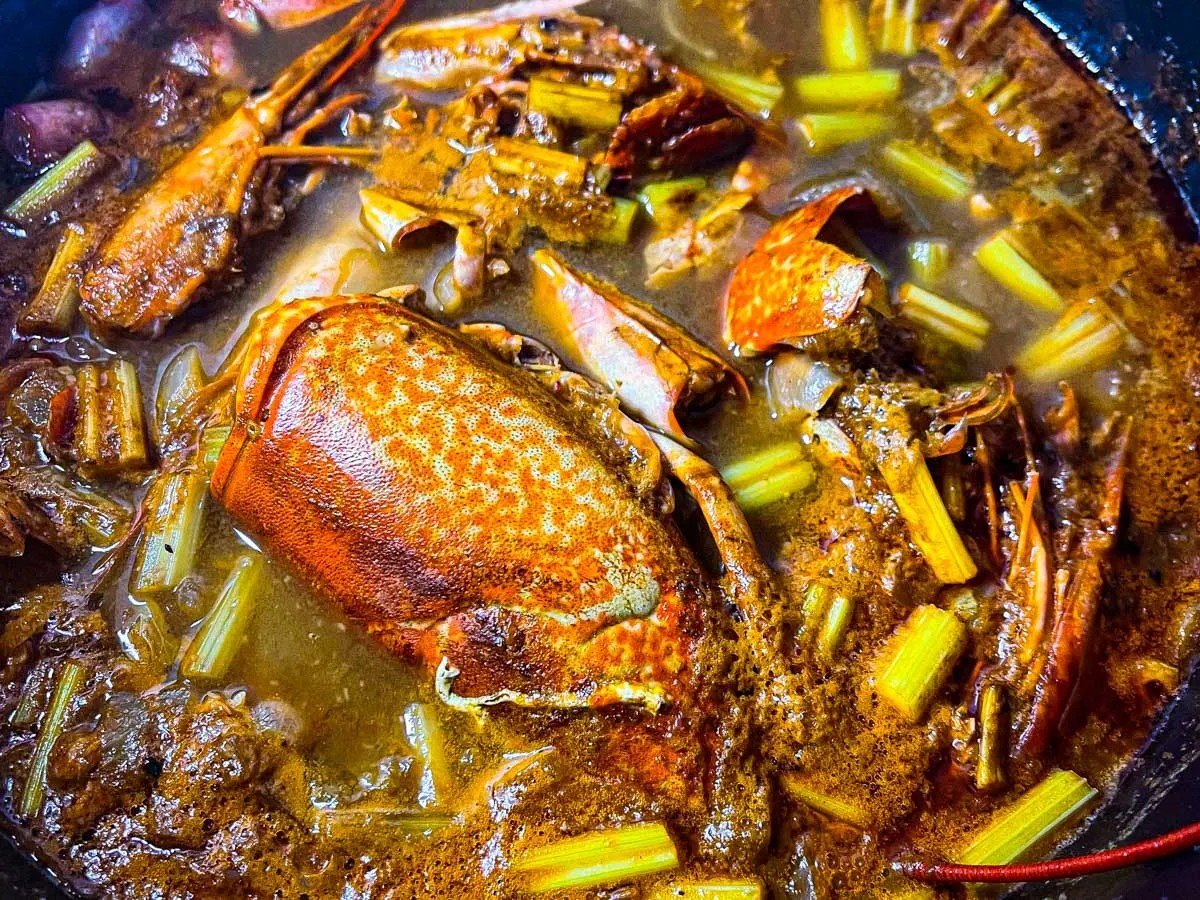
Making Lobster Bouillon for Sauce Américaine
Girona’s Tale of Two Menus
One of Girona’s most famous eateries is El Celler de Can Roca in Girona. Securing a table there is something of a pilgrimage for food lovers. Run by the Roca brothers, Joan, Josep, and Jordi each bring their unique expertise as chef, sommelier, and pastry chef. Their synergy has earned them three Michelin stars and recognition as one of the world’s best restaurants on multiple occasions.
The Roca brothers blend traditional Catalan ingredients with innovative techniques, and their vast array of flavors can be experienced through their various tasting menus, that is, if you are lucky enough to get a booking! I had a long booking, which I eagerly awaited in early 2020, and then COVID happened and all the restaurants closed, and I never got to rebook!
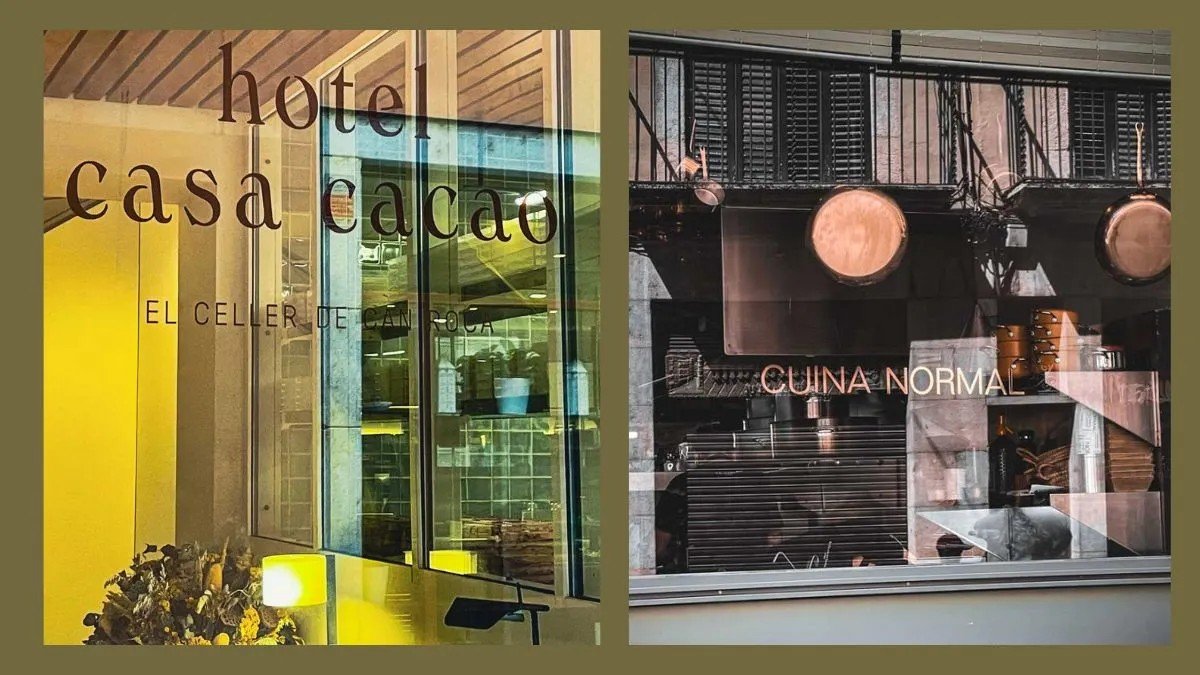
Roca Brothers Restaurants: ‘El Cellar de Can Roca’ and ‘Normal’
What makes the Roca brothers unique is their commitment to sensory dining—dishes designed to evoke memories and emotion.
It’s not surprising that the restaurant is so popular, serving such iconic dishes over the years as Chicken Cannellone with Foie Gras, Truffle, and Parmigiano or Pithivier stuffed with Bresse chicken, foie gras, truffle, and herb sauce, and for seafood lovers, Buñuelo of Blue Lobster with coriander with hot sauce.
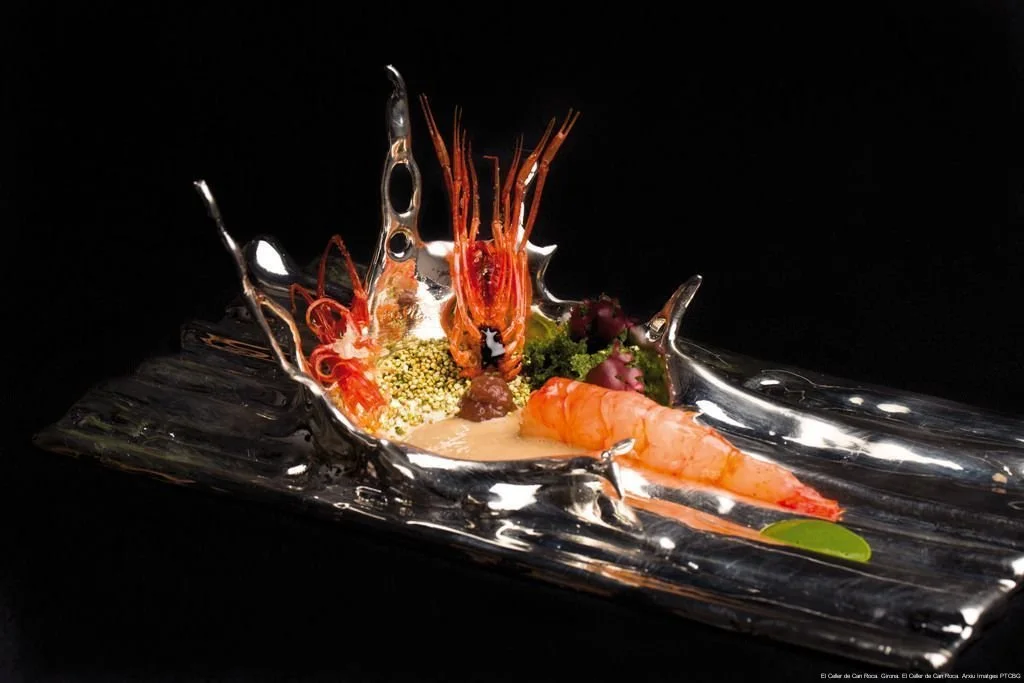
Signature Prawn Dish from El Celler de Can Roca
Affordable Indulgence at El Raco del Cava
While a visit to the Roca brothers’ eatery is normally reserved for those very special occasions — with the high expense and the long wait times—it was the humble El Raco del Cava where I found myself a regular fixture. Here, the food not only tastes wonderful but also presents a visual treat.
For a modest 15 euros, you’re treated to a tasting menu that’s nothing short of a feast for the senses — a combination of flavors artfully displayed on stark black slates, transforming each meal into a canvas of culinary creativity.
The owner, Josep, with the enthusiasm of a seasoned actor, narrates each dish’s backstory (in Catalan or Spanish) and proudly points out the original Salvador Dalí paintings he has adorning the cellar-like stone walls.
Unlike deep-fried tapas you might find elsewhere, the charcuterie here is simple yet comes together to create a wonderful symphony of flavors.
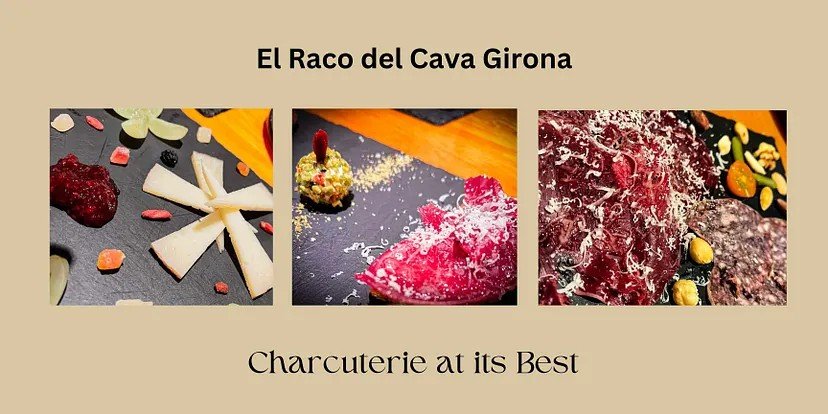
Tapas at El Raco del Cava
I would start with local cured pork salami, perfectly paired with tangy pickles, fresh tomatoes, and a crunch of pistachios. The do-it-yourself bruschetta, where you rub a clove of garlic and a ripe tomato across toasted bread, is delicious.
Then I would sample the unique flavors of Pate de Cebolla, a sweet onion pâté, and a vibrant Pate de pimienta verde. Cantabrian anchovies bring a taste of the sea, while smooth hummus served with crisp vegetable crudités offers a refreshing contrast.
Rich goat’s cheese and succulent Iberico pork with fruit chutney add layers of flavor and texture. For a bold choice, the beef tartare (tartar de fuet) was full of smoky indulgence. And the duck mousse with caramelized apple is sublime!
Each dish, simple yet rich in flavor, showcases how great but simple ingredients can create culinary magic.
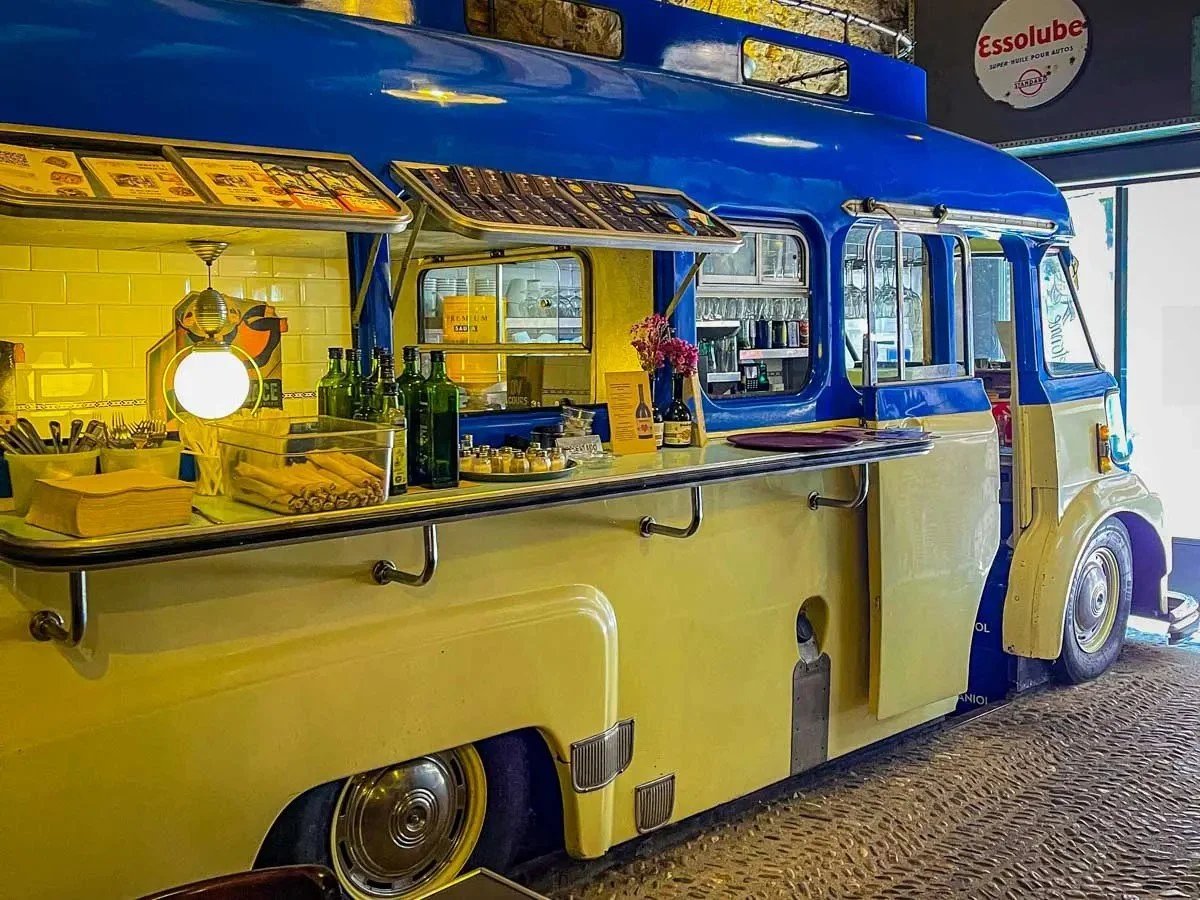
Creperie Bretonne, Girona — A novel bus serving delicious savory and sweet crêpes!
In Girona, the dining scene offers a regal spectrum of choices that cater to every palate and purse. Whether you choose to dine like a noble from “Game of Thrones” at El Celler de Can Roca, where the Feast Menu will cost you around €300 per person, or prefer to enjoy the royal treatment without the kingly sum at El Raco del Cava, where a mere €15 lets you feast on delightful tapas, the options are both plentiful and splendid.
Beyond these two culinary gems, Girona is home to hundreds of other eateries, each promising its own taste of this vibrant city. From high-end dining to casual bites, you’re unlikely to leave disappointed.
Or perhaps it’s enough simply to pause in a Girona street with something humble—a slice of bread rubbed with garlic, tomato, and olive oil—and savour the flavours that have defined this remarkable place for centuries.
Some cities leave you with photographs. Girona leaves you with flavours.
A gaudir!

Even queens must pause for pan con tomate!