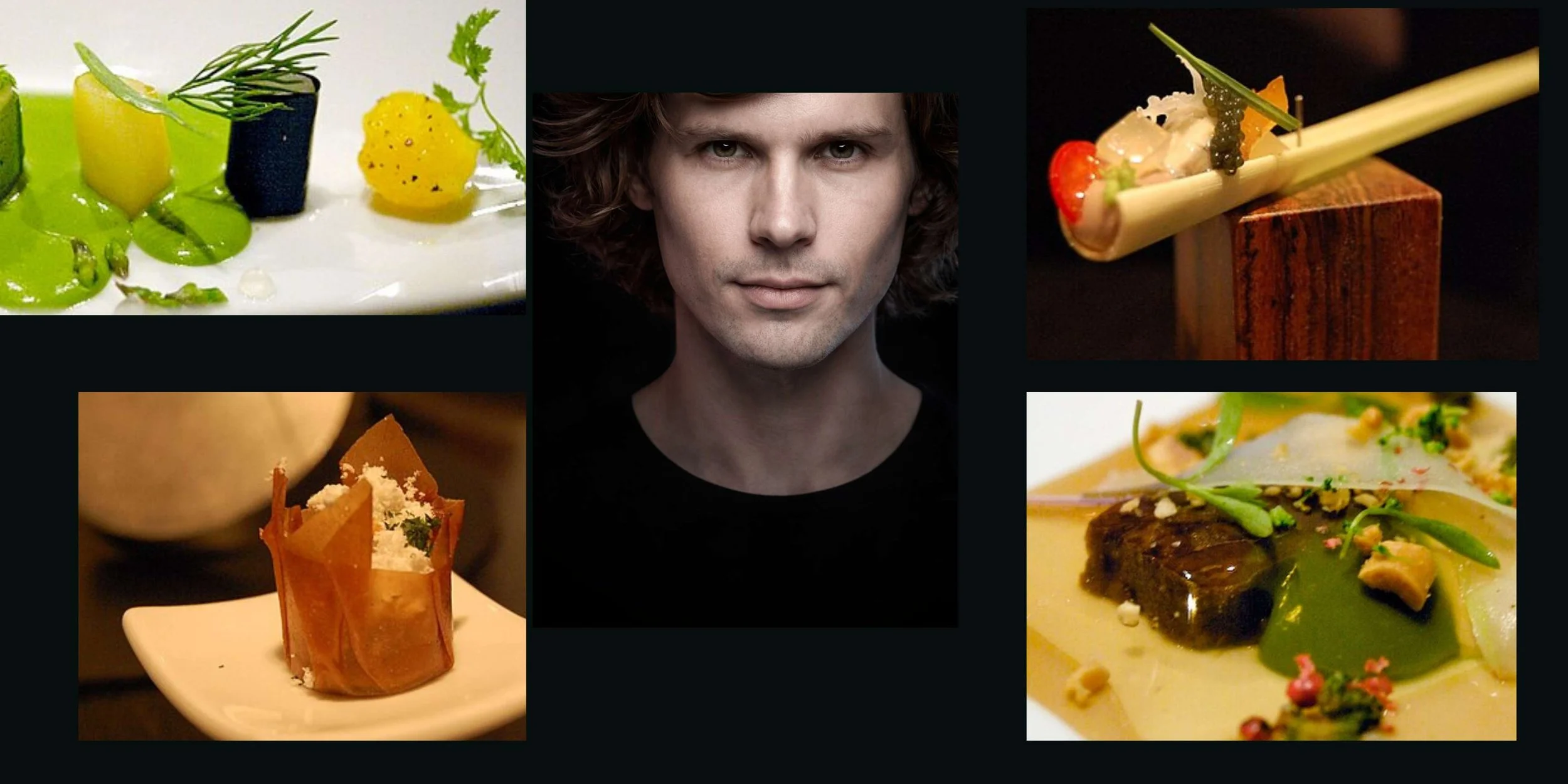
Alinea
On taste, theatre, and the chef who learned to begin tasting again

At Alinea, the table is not always a table.
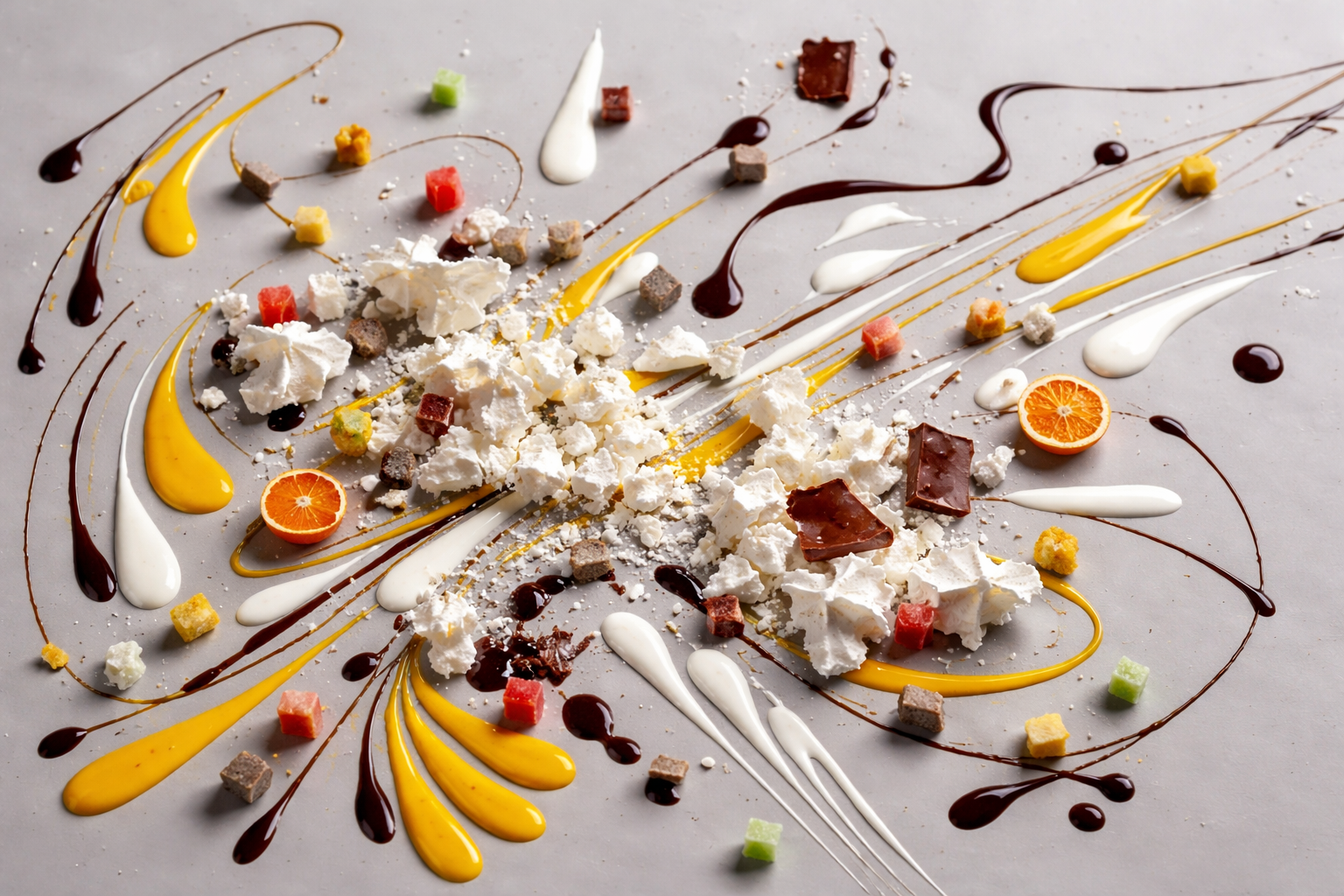
It may become a canvas. A surface for colour and movement. A place where dessert is painted, not plated. Where food arrives not simply to be eaten but to be encountered.
Here, dining is not a sequence of courses. It is a composition.
And somewhere behind it all stands a chef who once lost the very sense his art depends upon.
Grant Achatz did not set out merely to cook.
Trained in the rigorous discipline of classical kitchens and shaped under the exacting eye of Thomas Keller, he learned early the value of precision—of repetition, of control, and of perfection pursued plate after plate.
But precision, for Achatz, was never the end of the matter.
There was always the suggestion of something more.

When Alinea opened its doors in Chicago, it did so not as a restaurant but as a departure.
The name itself—Alinea, a typographical mark denoting a new paragraph, a new thought—was no accident.

This was to be a different kind of sentence altogether.
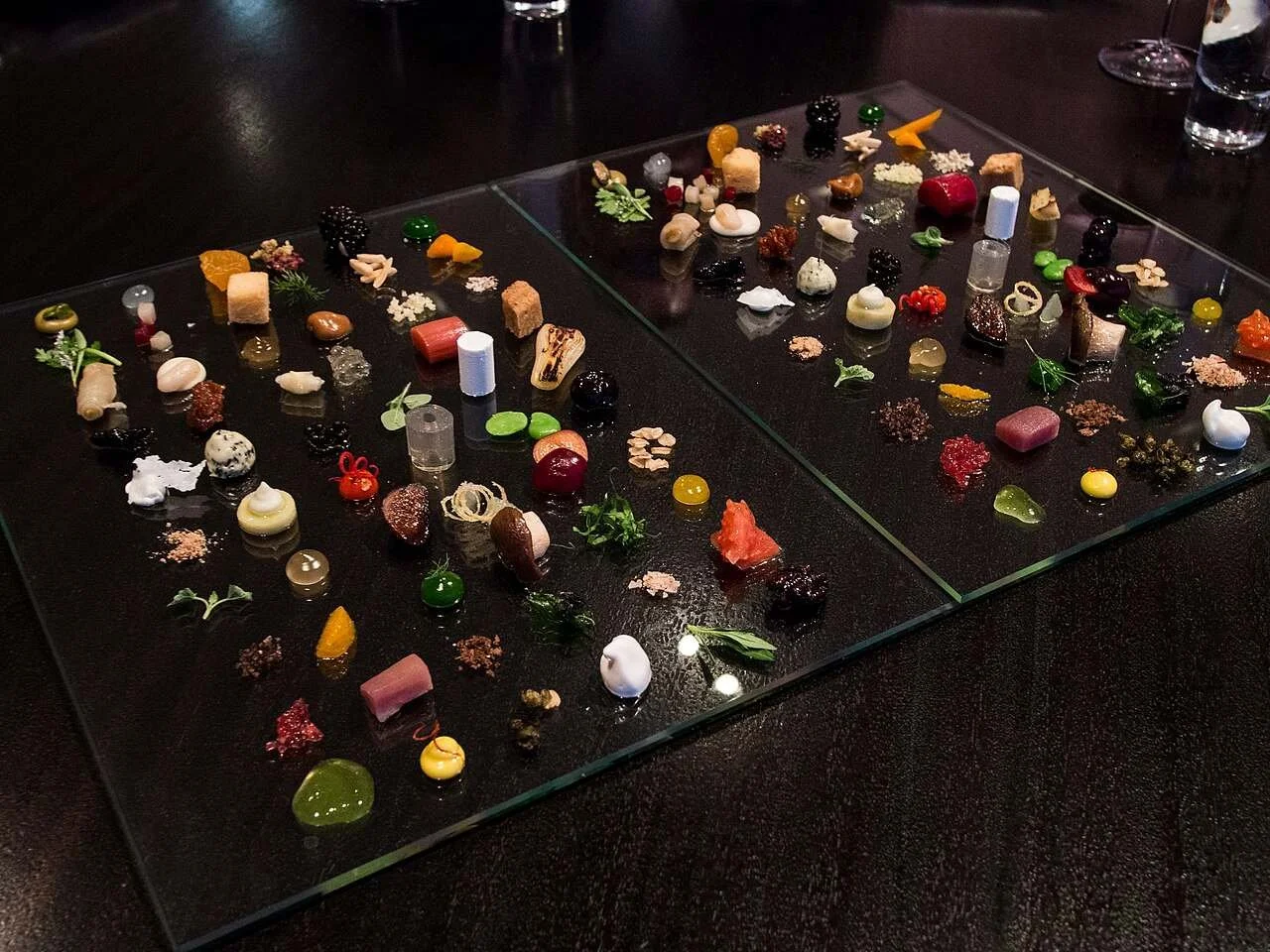
Here, dishes arrived suspended, deconstructed, and reimagined. Flavours unfolded in unexpected sequences. Familiar forms dissolved into something stranger, more playful, more precise.
Food became theater.
Not spectacle for its own sake—but an invitation to reconsider what dining might be.
To eat at Alinea is to relinquish certainty.
A bowl may not be a bowl. A course may not resemble anything you recognize. A dessert may arrive directly upon the table, transforming linen into landscape.
And yet, nothing is accidental.
Every gesture is composed. Every sensation considered.
Taste, aroma, texture, memory—each is drawn into the experience until the act of eating becomes something closer to attention.
And then—at the height of this ascent—came the interruption.
In 2007, Achatz was diagnosed with stage IV tongue cancer.
The prognosis was stark. The recommended treatment would have removed part of his tongue—ending, almost certainly, the career he had built upon it.
He chose another path.
Aggressive chemotherapy. Radiation. Uncertainty.
And, for a time, the loss of taste.
It is a curious thing—to build a life around flavour, and then to find oneself unable to perceive it.
To cook without tasting.
To remember what something should be without quite knowing if it is so.
And yet, Achatz continued.
He relied on memory. On instinct. On the trust of those around him. On a belief that taste was not only sensation but also understanding.
Slowly, gradually, it returned.
Not all at once—but in fragments. Notes rediscovered. Flavours relearned.
As though the palate itself were beginning again.
Something changed in that interval.
Not in the precision—this remained.
But in the intention behind it.
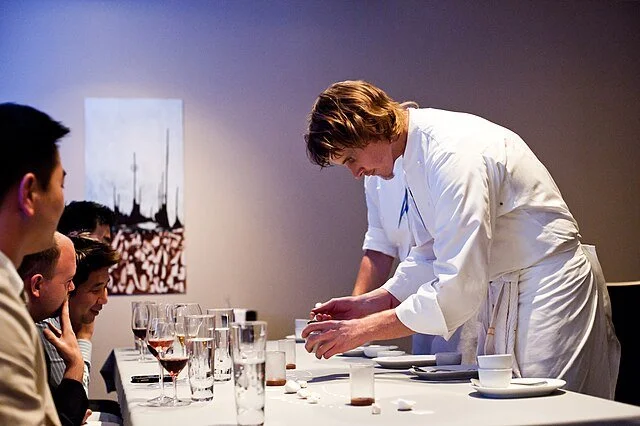
At Alinea, the experience feels as attentive as it is inventive.
Surprising, certainly—but always considered.
The theatrical remains, though it no longer rests on astonishment alone.
It leans instead toward presence.
There are dishes that arrive like questions.
A spoon that dissolves. A flavour that appears where none was expected. A sequence that unsettles, then resolves.
The diner is no longer entirely passive.
They become, in some quiet way, implicated.
And perhaps this is the quiet achievement of Achatz’s work.
Not that he transformed food into art—many have done that.
But that he asked something more of the act itself.
That he invited the diner not merely to consume but to notice.
There is a moment in any meal when the extraordinary risks becoming familiar.
When excellence becomes expectation.
When even the exceptional begins to feel… ordinary.
It is here that many falter.
But for a chef who has known the absence of taste, the ordinary is no longer a given.
It is something regained.
Something held.
Something, perhaps, never taken for granted again.
And so, at a table that is not always a table, a meal unfolds that is not simply a meal.
It is a sequence of attentions.
A series of small awakenings.
A reminder—quiet and persistent—that taste is not only what we experience…
…but what we are able to perceive at all.