
A January night of diamonds, dancing and a rather extraordinary supper
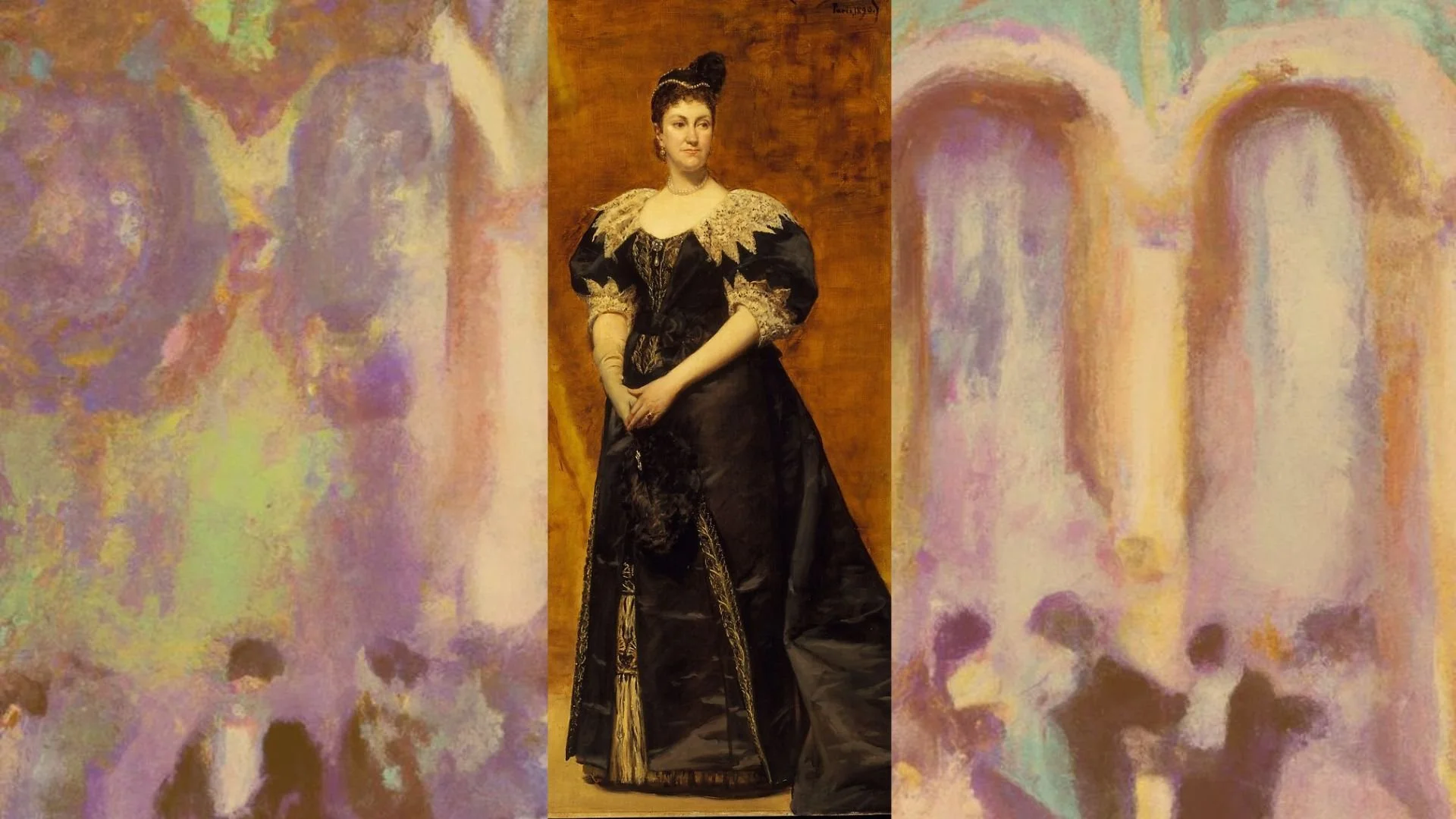
Caroline Astor by Carolus-Duran, 1890. The Metropolitan Museum of Art, New York.
On a cold January evening in 1898, Mrs William Astor opened the doors of her Fifth Avenue mansion for one of the most exclusive balls of the season.
There were other Mrs Astors. But in New York society, there was only one Mrs Astor.
Caroline Schermerhorn Astor had become the acknowledged gatekeeper of Gilded Age society. Together with her friend and social adviser Ward McAllister, she helped determine who belonged among New York’s elite—and, perhaps more importantly, who did not. McAllister famously declared that there were only about four hundred people in fashionable New York society. Beyond that number, he suggested, one encountered people who were simply not at ease in a ballroom. This elite became known simply as “The Four Hundred.”
An invitation to Mrs Astor’s ballroom meant you had made the cut.
The New York Times reported the January ball in extraordinary detail the following day—from the guest list and gowns to the supper menu and the coachmen waiting outside.
The evening began at the Metropolitan Opera House. Afterwards, between 350 and 400 guests made their way to the Astor residence, arriving at around eleven o'clock in a procession of carriages, evening gowns and jewels.
Mrs Astor received her guests in rooms filled with plants from her Rhinecliff conservatories. Three dozen vases held 250 long-stem American Beauty roses.
Nobody, it seems, had been asked to keep things simple.
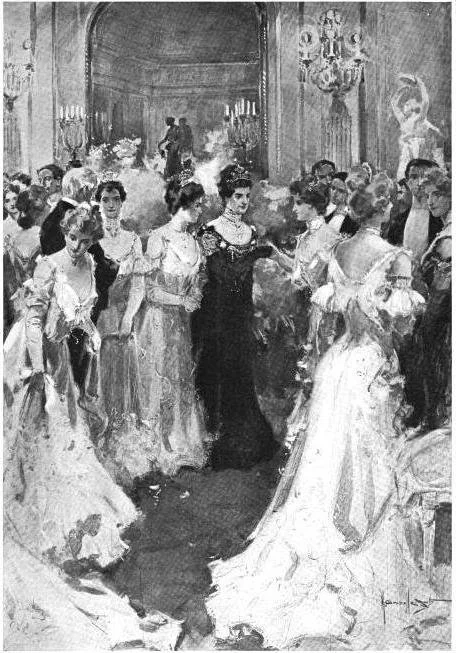
Caroline Schermerhorn Astor and her guests at one of her lavish balls, New York 1902.
The guest list was as carefully considered as the decorations. The New York Times noted that few of the city’s “old married folks” were present, except those useful as chaperones—or of such elevated social standing that their absence might have diminished the occasion.
The Roosevelts and Vanderbilts were among those who qualified.
For everyone else, youth appears to have been something of an advantage. The ballroom belonged largely to debutantes, young matrons and bachelor clubmen: the rising stars of New York society, dressed for an evening in which being seen was surely almost as important as being invited.
And there was plenty to see.
Mrs Henry Payne Whitney made a particularly memorable appearance in light rose-pink, wearing a diamond crown with a great spray of ostrich feathers fastened at her shoulder. Around her, the ballroom glittered with jewels, while the orchestra played unseen behind its screen of palms.
So considerable was the value being worn that evening that policemen and detectives had been engaged to protect the guests against what the Times rather wonderfully described as the possible attentions of a “highway robber.”
One can only hope the highway robber had not made the guest list.
Supper is Served
Amid all this dancing, diamonds and discreet security, there remained the important matter of supper.
A buffet was available during the evening, but shortly after midnight a hot supper was served, prepared by Louis Sherry, one of New York’s prominent restaurateurs and caterers.
And what did one feed several hundred members of New York society after a night at the opera?
The answer, apparently, was almost everything.
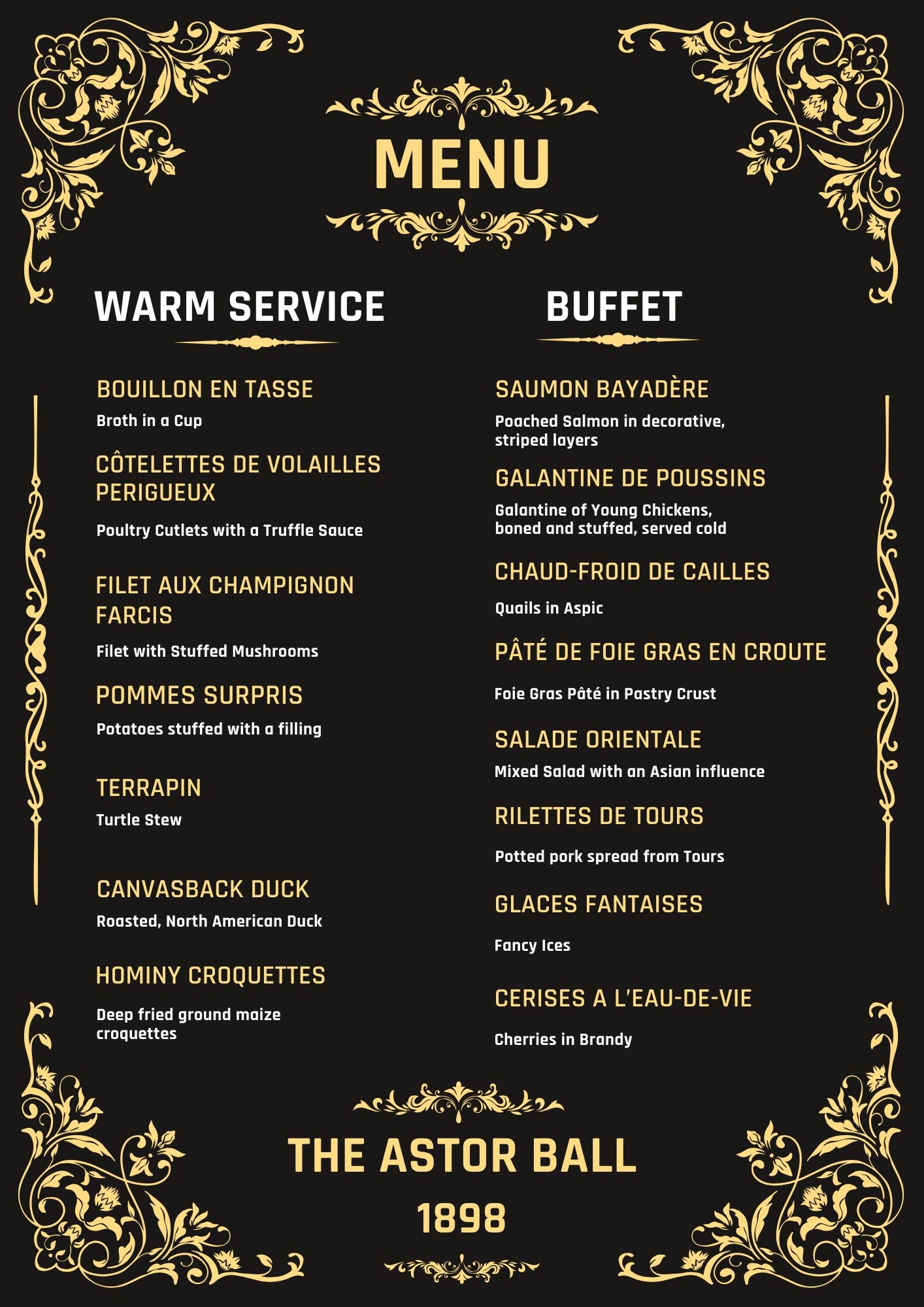
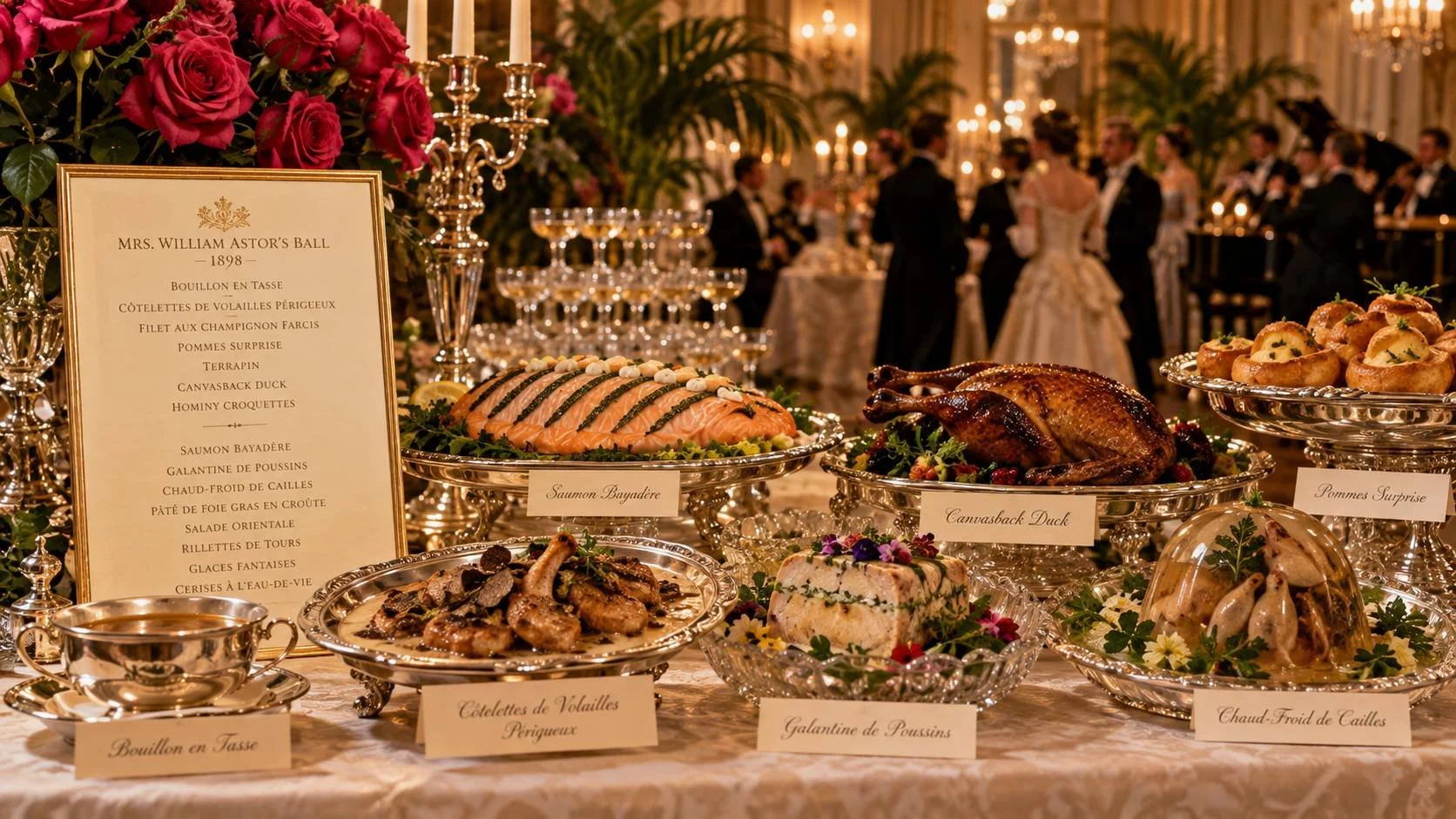
The supper menu at Mrs Astor’s Ball, 1898
Some of the dishes require little explanation. Others require considerably more courage.
There was salmon, poultry with truffles, stuffed fillet and foie gras. But alongside these more recognisable delicacies appeared terrapin, canvasback duck and hominy croquettes.
Terrapin, a freshwater turtle considered a delicacy at the time, would certainly be one of the entries most likely to give the modern diner pause.
Canvasback duck, at least, is a little more self-explanatory: roasted North American duck.
And then there were hominy croquettes—deep-fried croquettes made from ground maize. Perhaps rather less alarming, and proof that even in 1898 a good carbohydrate knew its place at a party.
On the cold buffet the extravagance continued: salmon Bayadère, galantine of young chicken, quail in aspic, foie gras in pastry and rillettes de Tours. Dessert brought fancy ices and cherries in brandy.
Nobody, one imagines, went home wondering whether there might be something in the fridge.
Outside the Ballroom
Supper over, the cotillion—an elaborate series of dances—took centre stage amid palms, flowers and the sparkle of jewels.
But beyond the doors of the Astor mansion, another supper was being served.
Outside in the January cold waited the coachmen who had brought the guests and their carriages to Fifth Avenue.
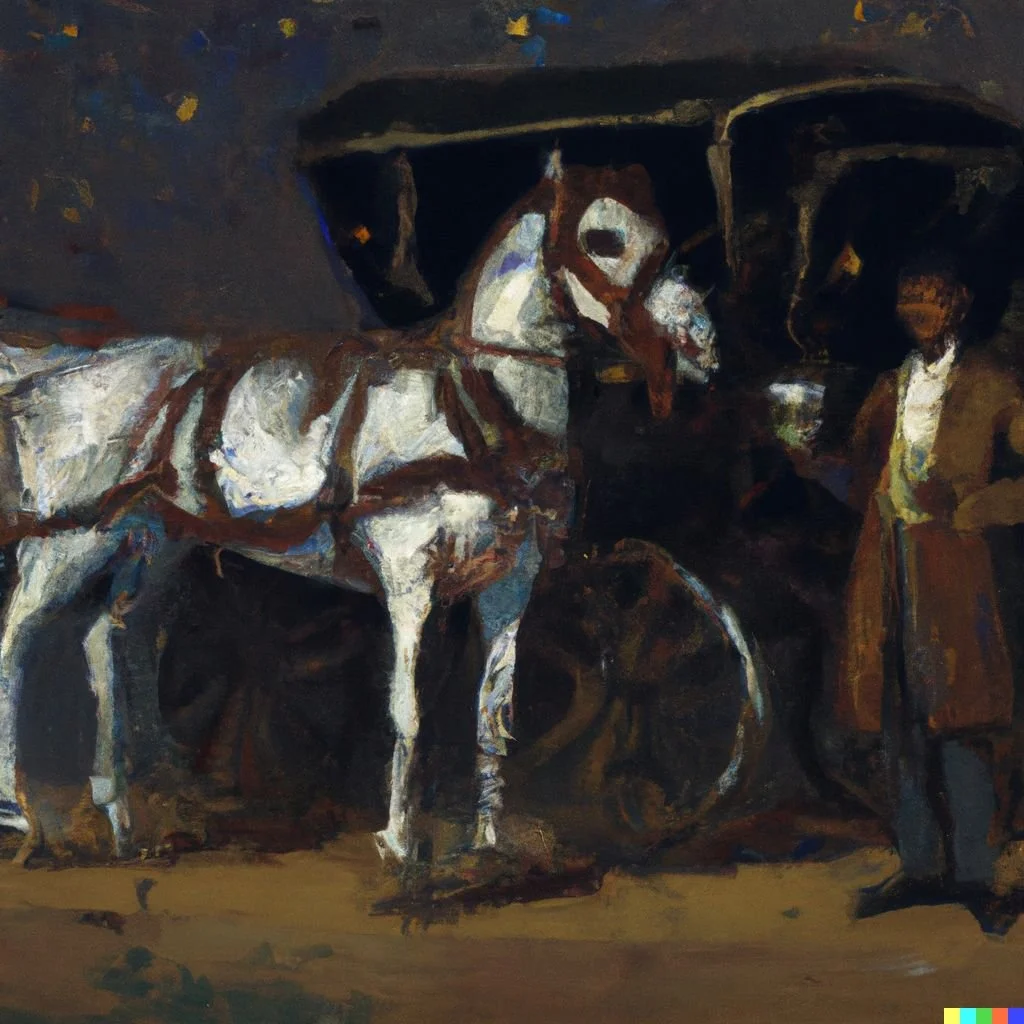
The Church Temperance Society had recently introduced a coffee van for coachmen, and Mrs Astor had—apparently somewhat reluctantly—helped fund its presence for the evening. Around 200 drivers made use of it. Each was issued a ten-cent chitty by the Astor household, entitling him to one sandwich and one cup of coffee.
The New York Times reported that the van promised to become popular with New York’s “exclusive set” now that Mrs Astor had given it her stamp of approval.
Inside, New York society danced on.
Outside, two hundred coachmen waited beside their carriages in the winter night.
One sandwich.
One cup of coffee.
Sometimes a menu tells us rather more about an age than what people had for supper.