
Can you fit a whole story into a teacup? Perhaps not. But give a writer 100 word limit and suddenly every word matters.
If someone had told me a few years ago that a ‘one hundred word’ challenge would change the way I wrote, I'd probably have smiled politely and carried on writing exactly as before.
I couldn't imagine squeezing a complete story into so little space.
As it turned out, the limitation wasn't the obstacle.
The limitation became my teacher.
When I first joined the writing platform Medium, I wasn't exactly prolific. In my first six months, I published just two stories. Then, almost by accident, I stumbled across Fiction Shorts, a publication offering writers a daily challenge: a random word, often accompanied by a twist, and a strict word limit.
Fiction Shorts began with the ‘drabble’ - a complete story told in exactly 100 words. Not 99. Not 101. Exactly 100.
So for two years, I wrote complete stories in just 100 words.
Over time, the challenge expanded to allow stories of up to 300 words, but the principle remained the same — take a prompt, impose a limit, and see just how much story you can squeeze into that tiny space.
Some 600 tiny stories later, I'm still doing it.
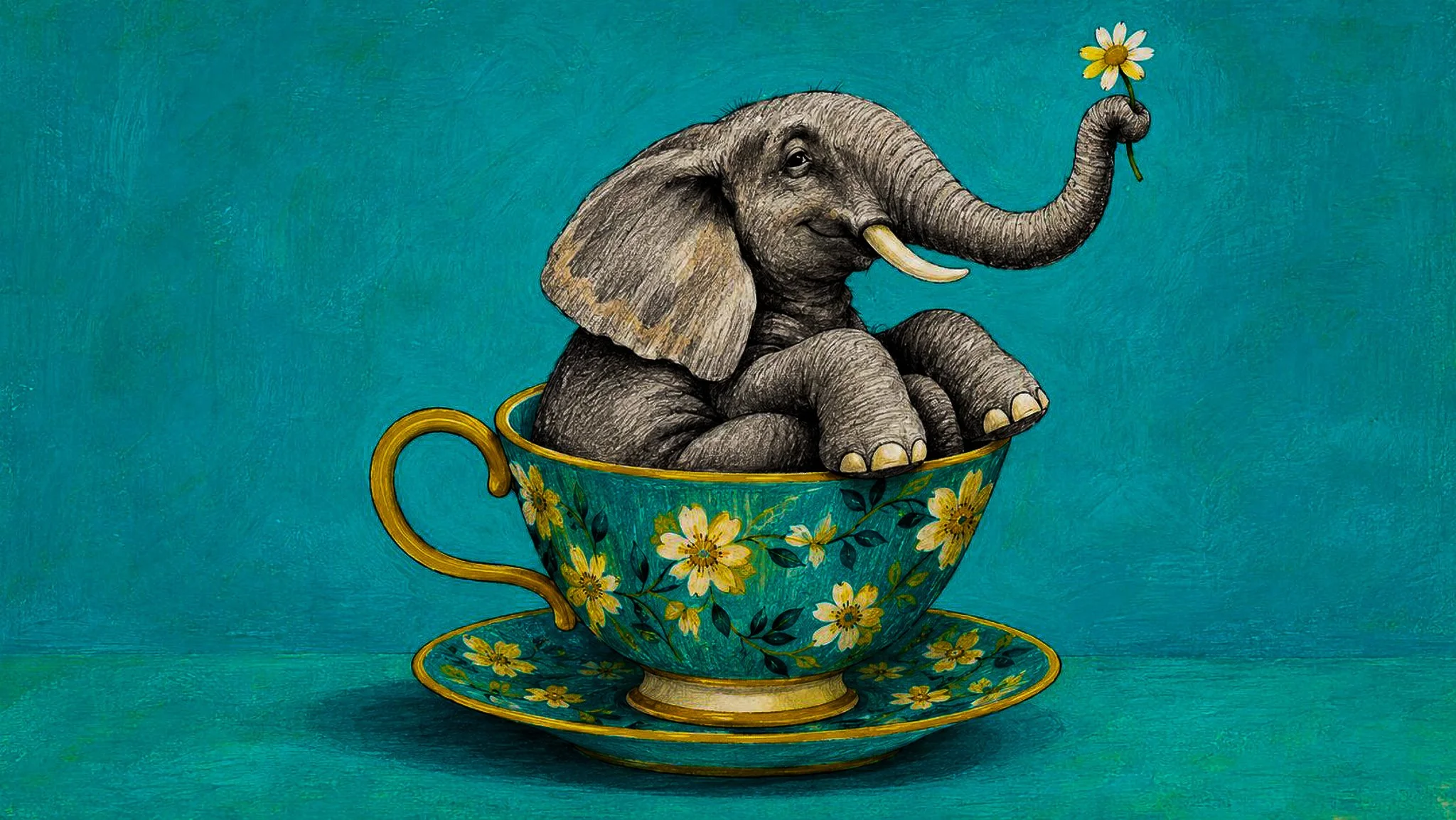
What began as an experiment became a daily writing habit: taking an unexpected prompt and attempting to distil a complete story into somewhere under 300 words. It's rather like fitting an elephant into a teacup — absurd, fun, and surprisingly addictive.
Some days an idea arrives immediately. On others, the prompt sits stubbornly on the page while I wonder what on earth I'm going to do with it. But that, I've discovered, is part of the magic.
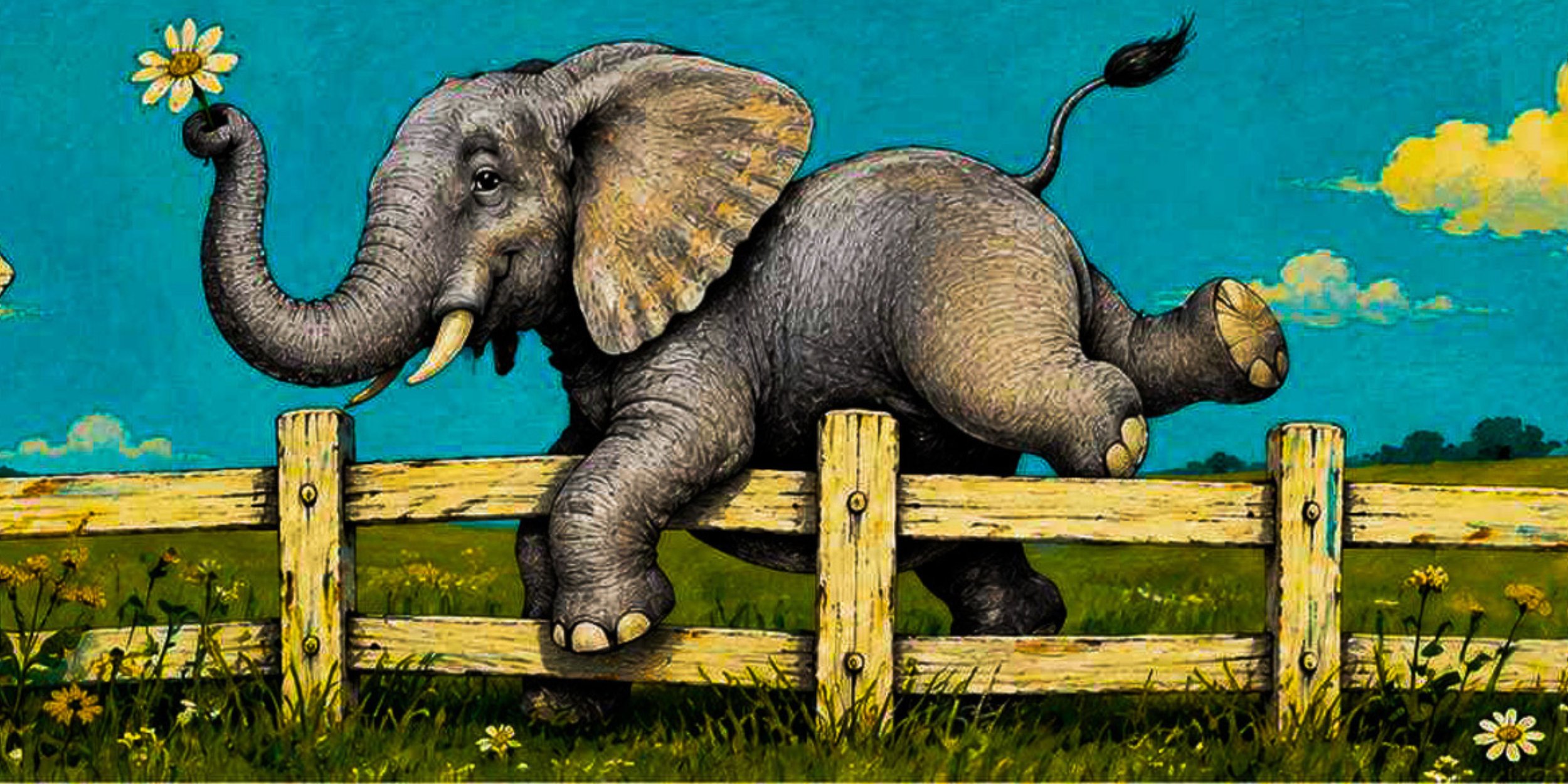
Give the imagination an enormous field and it may wander about aimlessly. Put a fence around it and it starts looking for ways over, under and through.
Most writers dream of having more words.
More pages. More chapters. More room to explain.
Oddly enough, becoming a better writer often begins with having fewer.
Ask someone to write a thousand words and they'll probably begin quite comfortably.
Give them a limit of one hundred words and something remarkable happens. Every sentence suddenly matters. Every adjective must justify its existence. Every paragraph has to earn its place.
Word limits have a curious way of exposing our habits. They reveal how often we repeat ourselves.
How frequently we explain what readers have already understood. How readily we lean on comfortable phrases instead of precise ones.
A strict word count is wonderfully unforgiving. There is nowhere for weak writing to hide. The first casualty is usually the unnecessary adjective. Next the unnecessary adverb. Entire sentences vanish. Before long, the story begins breathing more easily, almost as though it wanted to be this shape all along.
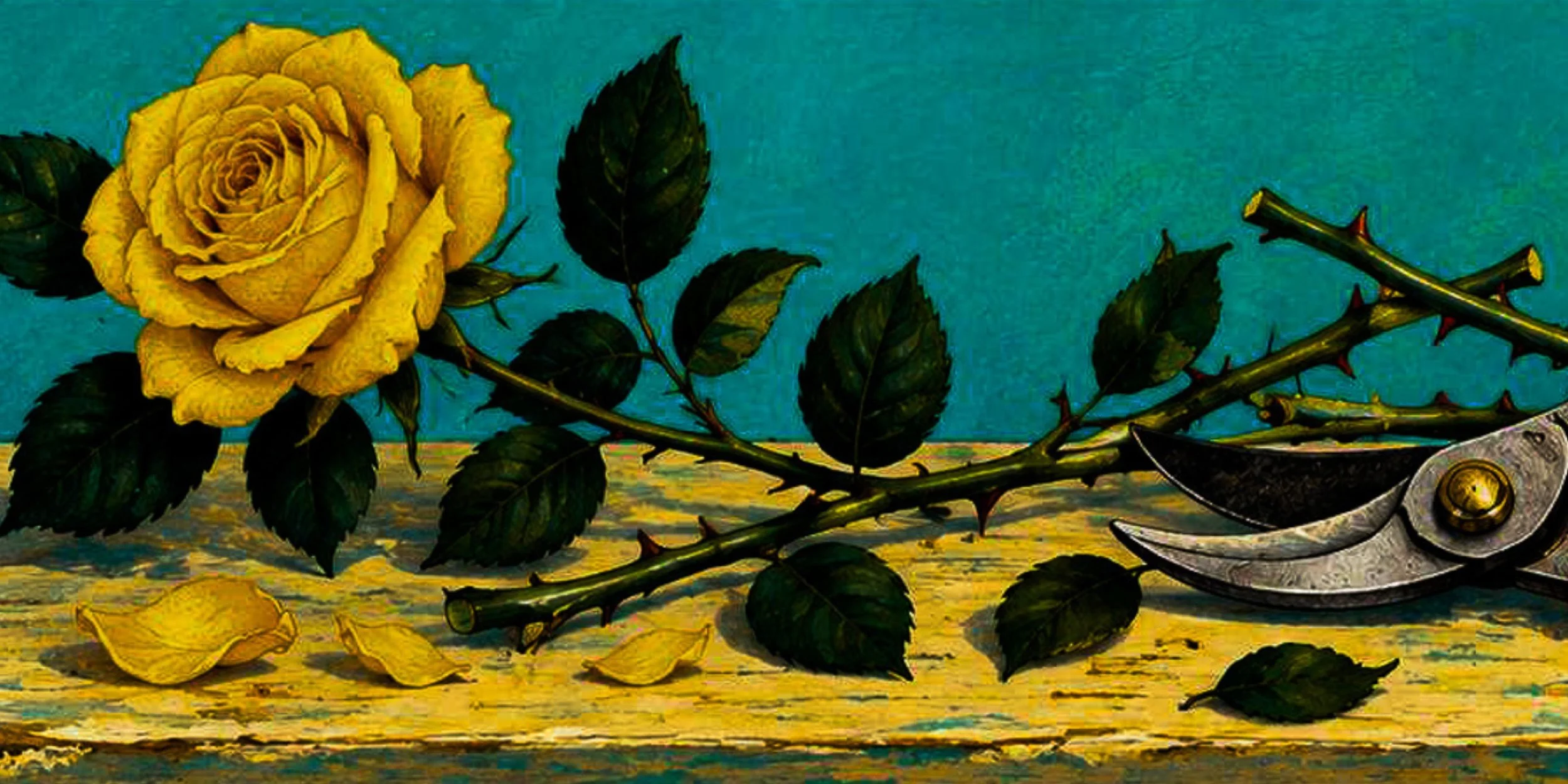
It feels rather like pruning a rose bush.
To an inexperienced gardener, removing healthy stems appears destructive. Yet every seasoned gardener knows that careful pruning produces stronger growth, healthier flowers and a more beautiful plant.
Writing works in much the same way.
We remove words not because they are bad, but because the story blooms better without them.
The ‘pruning’ exercise teaches something else that is harder to learn. And that is trust.
New writers often feel compelled to explain everything, worried the reader might miss the point. Experienced writers discover that readers enjoy making connections for themselves. Leave a small gap, and the imagination happily steps across it.
That confidence cannot really be taught. It has to be practised.
Tiny stories provide that practice every single day.
Writers have always worked within constraints. Newspapers once demanded exact column lengths. Radio scripts had to fit precise running times. Sonnets obeyed rigid forms. Haiku has survived for centuries because limitation encourages invention rather than preventing it.
The restriction becomes part of the creativity.
Writers who regularly work with very small word counts often find that their longer pieces improve as well. Their pacing becomes sharper. Their dialogue tighter. Their endings arrive with greater confidence because they've learned to recognise the exact moment a story has said enough.
I certainly didn't set out two and a half years ago to conduct an experiment in narrative minimalism. I simply found something I enjoyed and kept turning up.
But somewhere among all those tiny stories, something changed. I stopped asking how much I could fit into a story and started asking how much I could leave out.
Perhaps that is the greatest lesson of all.
Writing isn't about saying everything you can.
It's about discovering how little you need to say before the reader does the rest.
And that may be the most generous gift a writer can give.
And now a word from Garth…