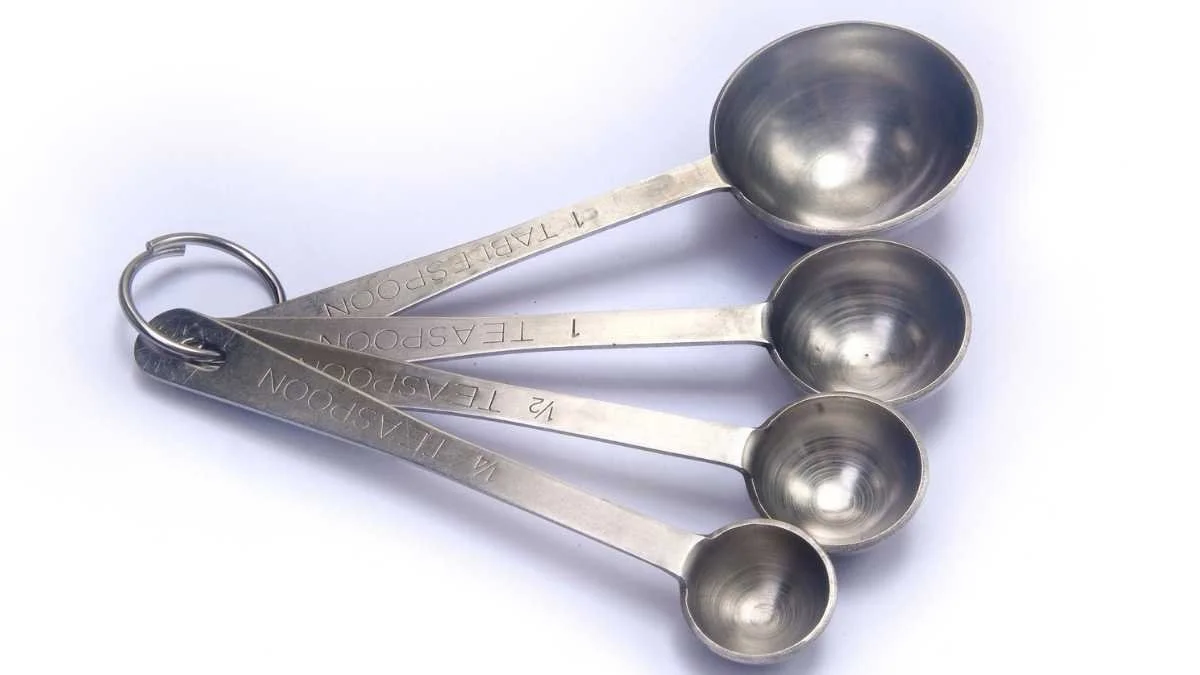
The Curious Chaos of Cooking Measurements
Every cook has encountered it — that moment when a recipe stops making sense and begins speaking in riddles.
Cooking, they say, is an art. But often, it can feel more like a comedy of errors, especially when you’re trying to decode the weights and measurements contained in some recipe instructions.
Let’s take a look at the wildly misunderstood world of cooking measurements, where ‘a pinch of humor’ is your most reliable ingredient.
The Tale of the 700-Degree Oven
Imagine the plight of a student diligently attempting to double a cookie recipe. The mathematics of ingredients was child’s play, but then came the oven temperature. The original recipe stated 350 degrees, so naturally, double the cookies, double the heat—right? At this rate, we’re not just baking cookies; we’re forging swords for medieval knights! He told his culinary instructor that he couldn’t complete the recipe because the oven wouldn’t go as high as 700 degrees!
The Seasoning Shenanigans
Picture this: A budding chef, armed with a recipe that casually suggests ‘salting to taste’’ The budding chef keeps adding salt until it’s not just a taste but a full-on, salt-forward smack-down. The dish doesn’t just whisper “sea breeze”; it yells “abandoned salt mine!”
Salting to taste simply means adding salt gradually, little by little, until you reach the perfect level of seasoning.
The Mysterious Case of the Missing Third
Then, there’s the cryptic command to “reduce by a third.” Does it mean measuring out a third and dramatically tossing it into the sink while whispering, “Goodbye, dear third, your sacrifice will not be forgotten”? Precision, it seems, is due a day off.
To reduce a sauce means to simmer or boil a liquid to evaporate water content, which intensifies the flavor and thickens the consistency.
The Enigma of L, M, S
The size of produce can turn the kitchen into a guessing game. How large is “large”? Is it “basketball” large, “balloon” large, or just “slightly-bigger-than-medium” large? And how small is “small”? As small as a pea, or as small as the chances of actually getting this recipe right?
When it comes to understanding size descriptors in recipes, think about the average size of the ingredient at the grocery store as your baseline. ‘Large’ often means bigger than what you commonly see, ‘medium’ is the standard size, and ‘small’ is noticeably smaller than average.
The Heat is on.
Cooking on high, medium, or low heat seems straightforward until you realize you need a degree in thermal physics. Each stovetop has its own interpretation of what “medium” heat is. It’s like asking five people for directions — you’ll end up even more lost.
Start to rely on visual and sensory cues. Observe how quickly a piece of garlic browns or listen for the sizzle when the food hits the pan. This can indicate if the temperature is correct.
Grains of Confusion
Then we have terms like “coarse,” “medium,” and “fine.” Coarse salt or fine salt? Fine like sugar or fine like beach sand? And let’s not even start with oatmeal.
Look for recipes that provide visual references or more detailed descriptions. When in doubt, go medium—a medium grind is usually a safe bet as it offers a balanced texture and flavor release.
The Temperature Tango
Defining temperatures as hot, warm, cool, or cold is like using “yesterday,” “today,” and “tomorrow” for time. It’s all relative and as precise as a weather forecast in the Bermuda Triangle.
If a recipe’s temperature instructions seem critical but are unclear, a quick online search for similar recipes can provide clarity—with practice, these terms will become more intuitive in different cooking scenarios.
Cup: The Measuring Maverick
Cups, the rebels of the measuring world, where a cup of flour can vary based on packing, air humidity, the cup’s mood, and the alignment of the planets. Ever tried measuring a cup of leafy greens? It’s like trying to stuff a sleeping bag back into its bag.
When measuring dry ingredients in a cup, always use a flat-edged tool, like the back of a knife, to level off the excess, ensuring accuracy and consistency. As for leafy greens, weighing them is a much more accurate approach.
Degrees of Doubt
Cooking, to a certain degree, quite literally, turns tricky with thermometers that seem to have a sense of humor. Even the fancy digital ones require the calibration skills of a lab technician.
Digital instant-read thermometers are generally more accurate and faster than dial thermometers. To check accuracy, use the ice water or boiling water test. For the ice water test, submerge the thermometer in a glass filled with ice and water. It should read 32°F (0°C). For boiling water, it should read 212°F (100°C) at sea level. Adjust these temperatures based on your altitude.
Crystal Clear?
Should coarse salt be pebble-like or just shy of a boulder? It’s anyone’s guess, as the recipe mysteriously omits the crystal size chart.
Coarse salt should have a gritty texture, with crystals noticeably larger than table salt, about the size of kosher salt or slightly larger.
The Egg-ceptional Dilemma
Finally, the egg—where size really does matter. Because apparently, chickens haven’t agreed on a standard size yet.
Enough to scramble any chef’s plans!
In the madcap world of cooking measurements, one thing’s certain: precision is a myth, and your best bet is a good sense of humor and a dash of adventure.
Happy cooking — and may the odds (and the measurements) be ever in your favor!